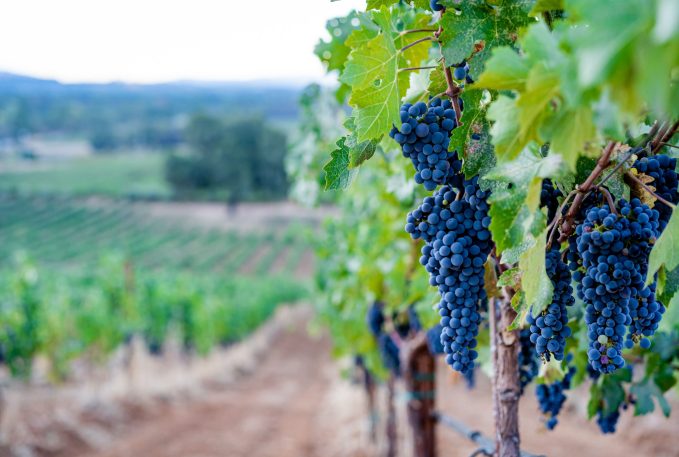
Wine X Staff
Wine X Online Edition
For our third harvest check-in, we return to Barra of Mendocino, where a promising vintage came with a wildlife problem nobody had encountered in seven decades of farming the home ranch.
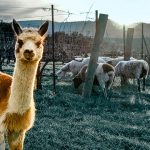
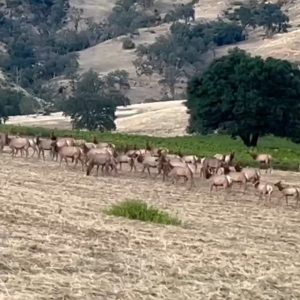
The first enthusiastic consumers of Barra’s 2026 Pinot Noir skipped the tasting room entirely. They arrived in two herds, ate directly from the vines and showed little interest in leaving.
Approximately 30 tule elk discovered the winery’s Redwood Valley Vineyards shortly before harvest. Pinot Blanc made the menu. Pinot Noir was apparently the favorite. For the Barra team, whose home ranch dates to 1955, this was a first. Every winery wants people talking about its fruit. Having several hundred pounds of wildlife help itself is a less desirable endorsement.
“We tried to find some humor in the elk situation,” Martha Barra says in the winery’s harvest report.
Understandable. The alternative was spending most of harvest arguing with elk. Despite the disruption, Barra finished picking on October 2 with a crop it describes as exceptional in quality, although 23 percent smaller. Harvest had begun August 19 with Moscato, and the season brought smaller berries and clusters, favorable picking weather and plenty of reasons to look forward to the wines.
The elk are the headline. What made it into the winery is the story.
An extended stay, without reservations
The herds arrived roughly two weeks before picking began and remained through most of the season, disappearing just two days before harvest ended. he team tried motion-activated lights, fencing, an electric fence and attempts to move the animals along with all-terrain vehicles. Nighttime machine harvesting finally proved more persuasive.
It would be an easy story to leave at the punch line if the damage had stopped with missing grapes. The elk also ate tender cordons, the developing arms of newly planted Pinot Noir vines. According to Barra, that damage will delay the young vines reaching full maturity by at least a year. That is a loss measured in future harvests, too.
Martha, who owns the winery and directs its farming operations, wondered whether decades of organic farming had helped make the property attractive to its unexpected visitors.
“Unfortunately, this may have been a situation where fifty years of farming organically attracted this wildlife,” she says.
Her speculation comes with the perspective of someone who has spent decades working this land. Whatever drew the elk, the team had to protect both ripe fruit and the vines that will supply future vintages.
A light harvest with a promising center
The smaller crop had a broader explanation than hungry visitors. Across Barra’s vineyards, berries and bunches were generally smaller than usual. Chardonnay experienced pronounced shatter, the failure of some flowers to develop into berries, reducing bunch weights.
The encouraging counterweight was the weather during harvest. Barra reports no measurable rain and no extreme temperature swings through the picking period, helping preserve the quality of the fruit. For drinkers, that is worth noticing. A small crop by itself doesn’t tell us how good the wine will be. Smaller fruit arriving in excellent condition gives a cellar team something more useful than an optimistic vintage slogan.
Barra’s experience also fits an encouraging regional pattern. Wine Institute’s early 2026 vintage report noted that Mendocino-based Bonterra Organic Estates began picking Pinot Gris on July 22, nearly two weeks earlier than in 2025. Its team reported flavor intensity in several lots alongside freshness and natural balance. Those are observations from another producer, rather than tasting notes for Barra. But they provide useful context for a Mendocino harvest in which early timing and lighter crops have come with genuine enthusiasm about quality.
At Barra, the fruit went into a broad lineup: Moscato, Chardonnay, Pinot Blanc, Pinot Noir, Sangiovese, Zinfandel, Cabernet Sauvignon and Petite Sirah, destined for Barra Reserve and Girasole Vineyards wines. There will be several ways to discover what this vintage has to say.
The 4 a.m. part of the story
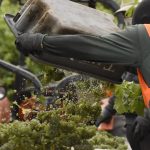
 While the elk occupied everyone’s attention, a less photogenic development was making harvest work more efficiently. Barra used a Pellenc bow-rod harvesting machine for the first time. The equipment transferred picked grapes directly into gondolas already aboard the truck headed for the winery, simplifying the trip from vineyard to crush. About 35 percent of the vineyard acreage was machine-harvested at night. Hand crews started as early as 4 a.m., avoiding daytime heat and bringing the grapes in cool.
This is the part of winemaking that rarely gets a romantic paragraph on a back label. Moving fruit efficiently, paying attention to its temperature and getting crews through the work matters enormously to the people trying to preserve what they grew. The new machine also happened to discourage the elk. A useful piece of equipment. An unexpectedly effective bouncer.
What Martha wants in the glass
We’ve covered Barra before, and this harvest brings us back to the relationship between its farming and the kind of wine the team wants to make. On a recent appearance on California Wine Country with Dan Berger and Daedalus Howell, Martha described the desired profile as “good mouth feel, round in the mouth, true to the varietal and balanced.” That is a helpful way to think about the 2026 crop.
The promise of smaller berries is interesting. The more compelling possibility is fruit that can deliver satisfying texture and recognizable character while staying balanced. Martha’s description gives us a standard to look for when these wines reach the glass.
The work toward that goal extends well beyond harvest. Barra’s estate vineyards are CCOF-certified organic, with the home ranch certified since 1989. Cover crops are returned to the soil, and the winery has been pursuing a biochar program since 2023. Old vines removed for replanting are converted into biochar through high heat and low oxygen, then mixed with pomace and returned to the vineyard soil. The program aims to support soil function, retain water and store carbon. There is something fitting about old vines contributing to the ground that supports their replacements. At Barra, the next vintage begins long before anybody calls the first pick.
Mendocino gets to keep the credit
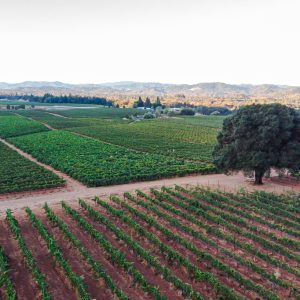 During Martha’s radio appearance, Berger described Mendocino as “having a moment.” In comments included in Barra’s release, he pointed to the county’s evolution from supplying excellent fruit for other regions’ blends to producing more wines that carry its own name. Barra makes that story tangible: estate-grown fruit, an established farming identity and wines that put Mendocino on the label.
For the 2026 vintage, the strongest reasons for optimism are close to home. The team reports exceptional fruit quality. Picking weather cooperated. Cool, early harvesting helped protect the crop on its way to the winery. And Martha’s emphasis on balance gives all that promising fruit a clear direction. We’ll wait for the finished wines before assigning flavors or declaring favorites. For now, this looks like a harvest worth following into the cellar. The elk have already registered their preference.
The rest of us will use glasses.