Wine X Staff
Wine X Online Edition
There are places where being down 26.5 percent gets you a closed-door meeting, a revised budget and somebody quietly updating LinkedIn. At Tablas Creek, it came with a measure of relief.
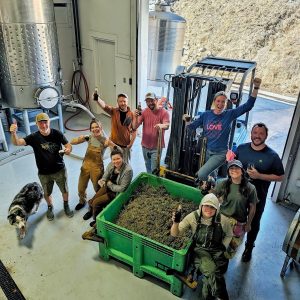
The Paso Robles winery finished its 2026 estate harvest with 284.4 tons, considerably less than last year but better than some of its midseason fears. Picking finally ended October 14, eleven weeks into a season that apparently had no interest in clearing anybody’s calendar. The final fruit came from a fourth pass through its oldest Roussanne block.
Four passes. At some point, you stop saying you’re visiting a vineyard and admit you’re in a relationship. For our fifth harvest dispatch, we head to a winery whose detailed reporting makes one thing clear: a smaller crop can still give everyone involved a very full season.
And across Paso Robles, the word “early” was doing considerably more work than it could comfortably handle.
Early, according to which grape?
 A first picking date makes an excellent headline. It is specific, easy to compare and requires very little explanation. Unfortunately, grapes have a habit of supplying the explanation anyway.
In his September 15 midpoint report, Jason Haas noted that Tablas Creek’s August 7 start involved only a little more than a ton of Viognier. The next estate pick did not happen until August 18. That first date was real, but it was a limited guide to the pace of the whole harvest.
More revealing was the order of arrivals. Much of the Grenache had been harvested while much of the Syrah remained outside, reversing the estate’s customary sequence. Haas estimated that Grenache and Grenache Blanc were running three to four weeks early, while the overall harvest was closer to a week ahead. He linked the accelerated Grenache ripening to its particularly light crop. That distinction deserves more attention than it usually gets.
“Early harvest” sounds like everyone received the same invitation and showed up ahead of schedule. Here, some varieties were already taking their coats off while others were still deciding whether to leave the house.
For the cellar crew, the practical question was always going to be more specific than the headline: what is ready today?
Spring moved the appointment
Elsewhere in Paso, Opolo’s first harvest update offered another useful explanation of the early calendar.
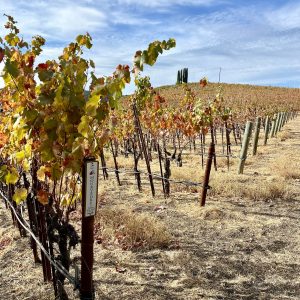 On August 26, the winery reported its first red-grape pick: Zinfandel from Remo Belli Vineyard in the Adelaida District. Winemaker James Schreiner described bud break roughly two weeks ahead of normal, with the subsequent growing stages also advancing.
But warm spells had been followed by milder conditions, slowing the pace. At Opolo’s westside Willow Creek District estates, Schreiner reported measured ripening and a familiar amount of time on the vine for color, flavor and acidity to develop.
An earlier date, in other words, did not automatically mean the fruit had been hurried.
Think of moving dinner from eight to seven because you started cooking sooner. The meal has changed time slots. Whether anything is underdone remains a separate question.
That is an important distinction for anyone encountering this vintage through a handful of alarming weather headlines. The calendar tells us when something happened. Understanding how the grapes got there requires a little more patience.
Conveniently, patience is also something we will need before drinking most of these wines.
The regional picture comes with local exceptions
The broader Paso Robles account supports the themes emerging from these estates.
In an October 6 message to members, Paso Robles Wine Country Alliance CEO Joel Peterson reported that many wineries had started picking ahead of their usual schedules and that yields were lighter than normal across much of the region. Initial quality reports were encouraging.
That gives us a regional frame. It leaves plenty of room for individual vineyards to behave differently.
We should resist turning Tablas Creek’s percentage decline into a number for Paso Robles as a whole. One estate’s results reflect its particular grapes, blocks and decisions. Even within that estate, the varieties were hardly moving together.
This is one reason winery harvest reports become more interesting when read alongside one another. Agreement on the broad outline can coexist with very different working days.
A region can have a light crop. One crew can still be waiting for fruit while another wonders when it last had an uninterrupted evening.
Less fruit did not mean an empty cellar
Tablas Creek’s October 6 update captures that distinction particularly well. By then, Haas described deep red colors, intense flavors and encouraging measurements. But the fruit had accumulated slowly. Ten weeks into harvest, the winery had averaged about 42 tons a week across estate and purchased grapes.
For comparison, its 2024 harvest included four consecutive weeks totaling 447 tons. The 2026 season was delivering a much more gradual workload. The difference is something anyone who has managed a restaurant, an airport pickup or a Thanksgiving kitchen can appreciate. The total matters. So does the arrival pattern. The smaller amount spread over a longer period still occupies people, equipment and attention. You cannot finish the job simply because the spreadsheet looks less crowded.
There is also a particular psychological cruelty to being nearly finished for an extended period. Your friends hear “almost done” and begin suggesting plans. The remaining grapes decline to participate.
Opolo’s breathing room disappeared
At Opolo, the season produced a different scheduling problem.
In its October 8 update, Assistant Winemaker Skye Bruce reported that the usual pause between warmer eastside estates and cooler westside properties had largely vanished. “We’ve been crushing grapes every day for more than three weeks straight without a letup,” she said.
The winery was about 75 percent finished, with later Bordeaux varieties still hanging at its Willow Creek District estates. Bruce expected completion in time for the October 17–18 Harvest Wine Weekend. That was the forecast at the time, rather than a confirmed final picking date. Set that alongside Tablas Creek’s long, uneven procession and the regional story gets better.
There was no single Paso harvest rhythm. These accounts describe different versions of the same professional obligation: keep watching the fruit and be ready when it is. Consumers get a vintage printed neatly on a bottle. The people making it have to live through all the days that number conceals.
A small block can still make three appointments
Opolo supplied another detail worth keeping. At its To the Moon Vineyard in the Willow Creek District, the team divided a 1.1-acre block into three picks over three weeks because different rows were maturing at different rates. Bruce said the resulting small lots also provided opportunities to work with different yeasts and techniques.
That is a considerable amount of attention for a patch of vineyard you could walk around without packing lunch. It also gives drinkers a more useful picture of harvest than the familiar photograph of one smiling person holding one perfect bunch.
Selective picking creates extra visits, extra handling and more separate decisions. Its value has to come from what those distinctions allow the team to preserve or develop. Put beside Tablas Creek’s return trips through Roussanne, it suggests a compelling way to follow this vintage: pay attention to the choices being made at the scale of rows and clusters.
The big regional adjective can wait.
The percentage needs a denominator
Back at Tablas Creek, the final numbers offer another reason to read past the headline. Estate tonnage was down 26.5 percent against 2025, but only about 11 percent below the ten-year  average. Removed acreage also influenced the total.
The varieties had different explanations for their declines: vineyard changes, older blocks and flowering conditions all played roles. Grenache and Grenache Blanc were especially affected by cool, wet bloom weather. Syrah finished slightly above its 2025 tonnage, while Roussanne came close to matching the previous year. There is a world of difference between “everything failed equally” and “several things changed for different reasons.”
It matters to the eventual wines, too. A cellar receiving a different balance of varieties has a different set of ingredients to consider. Exactly how that works out belongs to the winemaking team and its later blending decisions. For now, the responsible observation is also the interesting one: this vintage has more than one story inside it.
Promising fruit still has to become wine
The optimism in these reports is worth recording. In early October, Haas described vivid colors and intensity in the young Tablas Creek wines. At Opolo, Bruce reported powerful fruit, promising flavors and developed tannins. Those are encouraging assessments from the people working with the vintage. They give us reasons to follow its progress.
They also leave plenty to discover. We have not tasted these finished wines, and assigning them a shopping list of berries, spices and expensive forest products would be getting ahead of the cellar.
What we can judge already is the usefulness of the reporting. Specific observations, picking decisions and comparisons tell us more than another declaration that the vintage was exceptional. Good harvest coverage should make the eventual tasting more informed. It need not conduct the tasting in advance.
Even the press waited until the end
Tablas Creek’s closing detail belongs to Director of Winemaking Chelsea Franchi. As Haas recounted, a weld holding a press door to its track broke on the final bin of Roussanne.
There is something almost considerate about equipment choosing that moment to complain.
After a season of shifting estimates, staggered arrivals and repeat visits, even the machinery appears to have understood the assignment: get the last fruit through, then bring up your concerns.
For our fifth harvest check-in, that feels like an appropriate place to leave Paso Robles. The reports offer lighter crops, distinct vineyard experiences and encouraging early assessments. They also offer a reminder that the work behind a vintage rarely fits the tidy language used to introduce it.
We get to wait for a bottle.
The crews had to get every one of those picking decisions made first.
And somewhere at Tablas Creek, a press earned a repair and a few uninterrupted days off.