Wine X Staff
Wine X Magazine Online Edition
Our fourth Wine X harvest check-in heads to Willcox, Arizona, where winemaker Jef Stebben spent 2026 adjusting the schedule. The grapes kept changing it.
By the time a tarantula tried to move into one of the presses, Aridus Wine Company had already dealt with enough surprises to fill a harvest report.
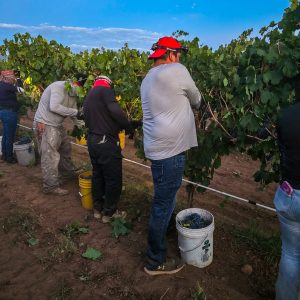 The grapes were ripening out of sequence. Sugars were climbing while seeds and skins seemed to be working from a different calendar. Monsoons could cool things dramatically, then stop picking altogether.
The tarantula was going to have to find somewhere else.
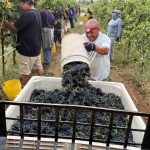
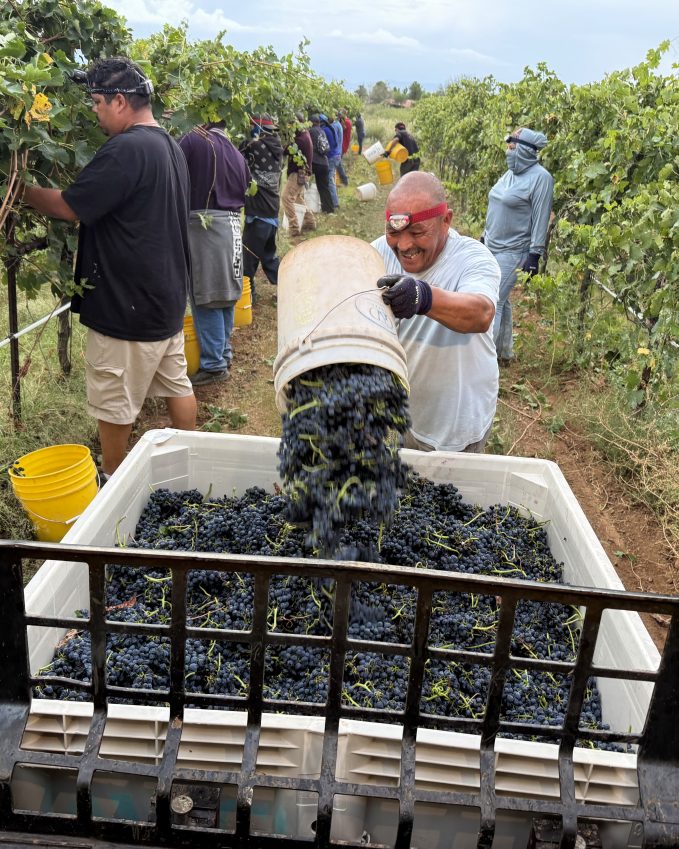
At Aridus, the 2026 harvest began July 14 with purchased Chardonnay and wrapped September 9. Estate fruit started arriving July 30 with Sauvignon Blanc. Once things got moving, the pauses winemaker Jef Stebben anticipated never really materialized.
“The speed at which the grapes came in was astounding,” he says in the winery’s harvest report. “We thought we’d have breaks, but we didn’t. It just kept coming until the last fruit was in.”
The estate delivered more than 100 tons of grapes, roughly 7 percent more than in 2025. After the lighter crops reported in our California installments, that is a welcome change in the conversation.
Better still, Stebben is pleased with what he is tasting. Malbec is already a particular source of enthusiasm.
Desert wine, with some altitude
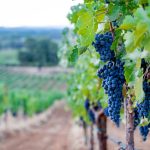
Aridus farms a 40-acre estate near Pearce, about 45 minutes from its Willcox winery. At nearly 5,000 feet in the Chiricahua Foothills, the vineyard combines mountain elevation with the desert conditions behind the winery’s name.
The estate supplies its grapes apart from Chardonnay, which Aridus purchases. Its plantings range from Sauvignon Blanc, Viognier and Malvasia to Cabernet Sauvignon, Malbec, Syrah, Tempranillo and Graciano, among others.
“Our estate vineyard offers a distinctive combination of mountain elevation and desert conditions that produces wines unlike those from anywhere else,” says founder Scott Dahmer.
In 2026, those conditions certainly gave the team something to work with.
An early burst of heat made the growing season appear dramatically ahead of expectations. Initially, Malbec and Petite Sirah looked as though they might beat Sauvignon Blanc to the winery.
Then the whites caught up.
“We thought we were going to be picking red grapes first,” Stebben says. “Instead, the whites matured enough that we picked all of them before the first red came in. It was completely unexpected.”
Even that wasn’t a tidy progression. The team picked Sauvignon Blanc, moved to Viognier, then returned for more Sauvignon Blanc.
Anyone hoping for a neatly laminated harvest schedule was going to be disappointed.
When sugar doesn’t tell the whole story
The unusual picking order was only part of the challenge.
 Sugars rose quickly, but seeds stayed greener than expected. Stems weren’t becoming woody in the usual way. Skins weren’t softening as they normally would.
For the person drinking the eventual wine, this is where the story becomes more interesting than a weather recap. A grape can reach a particular sugar level while other aspects of its development remain on a different timetable. Picking well requires understanding what is happening in the fruit.
“Grapes don’t always follow the rules,” Stebben says. “The stems, seeds and flesh can all mature at different rates. This year, the chemistry was changing so quickly that we really had to taste the fruit and pay attention to what it was telling us.”
That is an encouraging account of how the team approached a difficult season. Familiar indicators still mattered, but tasting helped guide decisions when those indicators stopped lining up.
Stebben wonders whether unusually intense ultraviolet radiation contributed to the odd development. He recalls repeated extreme-UV warnings during the growing season, although he is explicit that he cannot establish a cause.
The unanswered question remains something to investigate. Harvest couldn’t wait for the answer.
Then the monsoons arrived
The storms offered genuine relief. Stebben reports temperature drops of 30 to 40 degrees Fahrenheit when monsoons moved through, along with much-needed water.
They also made planning considerably harder.
Rain could drench one location while leaving a vineyard just 1,000 feet away dry. At times, crews had to delay picking for a day or two while the fruit dried.
The team was managing grapes that might need attention quickly and weather that could take away the opportunity to pick them.
A demanding season doesn’t automatically produce a great wine. What makes Aridus’ account promising is the attention given to those changing conditions, followed by Stebben’s enthusiasm for the wines now developing in the cellar.
A little automation. A lot of judgment.
Some welcome breathing room came from new pumpover automation.
Pumpovers circulate fermenting juice over grape skins. At peak production, the new system saved an estimated 10 to 12 labor hours a day, according to the winery.
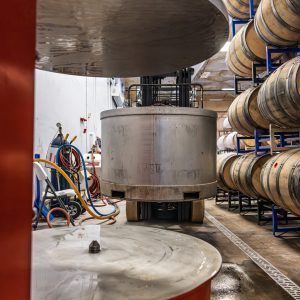 During a harvest that refused to pause, that is a meaningful amount of time.
A revised yeast-preparation protocol also allowed Stebben to delegate work he had closely supervised for decades. Meanwhile, the team became more selective about cold soaking, deciding which red-wine lots would benefit from a period of skin contact before fermentation instead of treating every lot alike.
Those decisions belong in the quality story. Different fruit calls for different handling, particularly in a year when varieties and vineyard blocks have behaved so differently.
Stebben’s advice from the season was practical: “Be prepared for anything.”
Then he added something that deserves equal billing.
“And be kind. Everyone was working hard, and the respect and support people showed each other made a real difference.”
A useful instruction in a cellar. Also pretty good advice anywhere people are tired and the plan has changed again.
Malbec, moonlight and the wines ahead
Malbec supplied one of the season’s happiest developments: a generous crop that Stebben says turned out very well, despite striking differences in vigor between neighboring vines.
It also supplied the setting for an early-morning encounter with an unusually pale, almost white fox.
Elsewhere, the tarantula kept trying the press. Monsoon rains brought grasshoppers, frogs and toads. One evening, after harvest work and cleanup, the crew stepped outside beneath a nearly full moon to a chorus surrounding the crush pad.
“It was so loud, coming from all around us,” Stebben recalls. “Everybody had this goofy, kid-like smile. It was something magical and special.”
After weeks of watching the weather and trying to stay ahead of incoming fruit, the team got a moment to stand still and listen.
The cellar work continues, with malolactic fermentation, racking and aging taking the wines toward their next stage. Sauvignon Blanc, Malvasia and Rosé are expected to be the first 2026 wines bottled, with Rosé tentatively first for release.
There are no finished-wine tasting notes to offer yet. There is a larger estate crop, a Malbec that has the winemaker excited and a team that adjusted its approach as the season demanded.
That gives us plenty of reason to follow these wines.
We’ll keep an eye out for the Rosé. And leave the tarantula off the guest list.