
Darin Szilagyi
Wine X Online Edition
There is a tendency among wine lovers to romanticize the past.
The great vintages were behind us. The bargains were already discovered. Napa was affordable. Burgundy wasn’t impossible. Bordeaux was still Bordeaux.
Yet a fascinating new study published in the Journal of Wine Economics suggests something that runs counter to nearly every nostalgic narrative in wine: today’s consumers may have more access to great wine and better value than at any point in modern history.
The study, A Structural Break Analysis of Wine Spectator’s Top 100, 1988–2025, examined nearly four decades of Wine Spectator Top 100 selections and found that while the wine world has become dramatically more diverse, the average inflation-adjusted price of highly rated wines has actually declined over time while quality scores have remained remarkably consistent.
In other words, consumers are getting more choice without sacrificing quality.
For much of the twentieth century, the fine wine conversation was largely controlled by a relatively small number of regions. Bordeaux, Burgundy, Tuscany, Napa Valley, and a handful of others dominated the conversation. If you wanted world-class wine, conventional wisdom told you where to look.
Then something happened.
The walls came down.
Argentina found its footing. New Zealand emerged. Chile matured. Australia surged. Washington State improved. Paso Robles gained credibility. Regions that once occupied the margins of the wine world began competing on equal footing with historic giants.
According to the study, the most significant shift occurred beginning in the late 1990s, when regional concentration within the Top 100 began to decline rapidly. The wine world became larger, more competitive, and ultimately more consumer friendly.
Today, the authors suggest, that diversification has largely stabilized. The great expansion has happened. The map has been drawn.
Which raises an important question.
If there are fewer entirely new regions left to discover, where should curious wine lovers be looking next?
At Wine X, we think the answer is obvious.
The future belongs not to undiscovered regions, but to overlooked producers.
The greatest opportunities in wine today are increasingly found in wineries that have quietly focused on farming, authenticity, and consistency while others chased luxury positioning, influencer attention, and escalating prices.
Consider Titus Vineyards.
 For decades, Titus has quietly produced some of Napa Valley’s most compelling wines without succumbing to the notion that greatness requires exclusivity. In an era where many consumers associate Napa with eye-watering price tags, Titus continues to demonstrate that exceptional Cabernet Sauvignon can remain approachable, balanced, and attainable.
Or take Barra of Mendocino.
Mendocino has long existed in the shadow of more famous neighbors, yet wineries like Barra consistently produce wines that outperform their price category. If the study’s findings are correct, producers like Barra are exactly the kind of beneficiaries globalization should create: high-quality wines from regions that have not yet fully priced in their reputation.
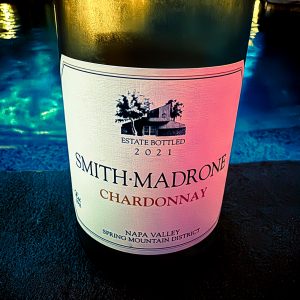 Smith-Madrone offers another lesson.
Perched high on Spring Mountain, the winery has spent decades doing exactly what it believes is right rather than what the market temporarily demands. The wines are unmistakably connected to place, crafted with restraint and purpose rather than fashion. In a world increasingly filled with wines designed to attract attention, Smith-Madrone remains committed to earning it.
The same could be said of Tablas Creek, whose long-term commitment to Rhône varieties, regenerative farming, and vineyard stewardship has made it one of California’s most respected producers. Their success serves as a reminder that patience often ages better than trends.
 Then there is Ridge.
Few wineries in American history better illustrate the relationship between quality and value. Ridge has spent generations proving that world-class wine does not require pretense. It requires conviction. While prices throughout the luxury wine market have continued their relentless climb, Ridge remains one of the clearest examples that authenticity still matters.
And finally, Galante Vineyards, whose wines continue to remind us that wine’s purpose is not to impress strangers. It is to create moments. The best bottles don’t merely earn scores. They earn memories.
Perhaps that is the most important takeaway from the study.
The democratization of wine is not a threat to quality. It is evidence of progress.
The old hierarchy of wine is weaker than it once was. More regions can compete. More producers can succeed. More consumers can participate.
The result is a marketplace where excellence is no longer confined to a handful of famous addresses.
For wine lovers, that should be celebrated.
Because the next great bottle is increasingly unlikely to come from a place nobody has heard of.
It is far more likely to come from a producer you’ve driven past, overlooked on a shelf, or skipped while chasing something more famous.
The golden age of wine may not be waiting somewhere in the future.
It may already be here.
You just have to know where to look.
Source: Gokcekus, O. (2026). A Structural Break Analysis of Wine Spectator’s Top 100, 1988–2025. Journal of Wine Economics. The study analyzed nearly four decades of Wine Spectator Top 100 rankings and found increasing regional diversity, declining concentration among producing regions, and lower inflation-adjusted prices despite stable quality scores.