Darin Szilagyi
Wine X Magazine
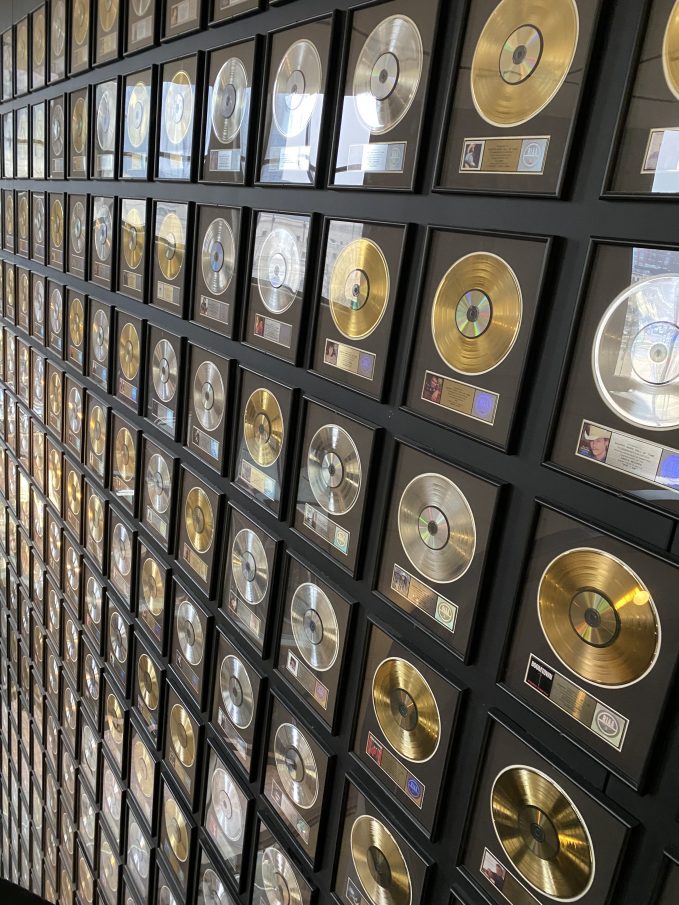
Every trend tells two stories. The first is the obvious one, the version people repeat because it fits neatly into a headline. The second is the one that matters, because it reveals what people are actually looking for beneath the surface of a fad or fashion. The obvious story right now is that albums are back. Vinyl continues to grow, CDs have shown surprising life in certain corners of the market, and physical music formats have managed to reclaim relevance in an era when nearly every recorded song is available instantly through a phone. The more important story is not that people suddenly lost access to music. It is that access alone is no longer enough. The return of the album suggests that consumers are reaching for something that streaming does not provide, and what they are reaching for has very little to do with audio fidelity. It has to do with time, attention, ritual, and the growing desire to slow life down.
For years, the music business followed the same path as so many modern industries. It optimized relentlessly for convenience. Streaming solved discovery, portability, cost, and access all at once. It made music constant, frictionless, and omnipresent. In one sense, it was a triumph. But in another, it quietly changed the nature of music consumption itself. Songs became something people sampled, skipped, shuffled, or placed in the background while doing everything else. The album, once a deliberately sequenced experience, became secondary to the playlist. Music was no longer something that necessarily marked time. More often, it simply filled it. That is why the resurgence of albums is so interesting. It is not happening because streaming failed. Streaming is successful by every conventional measure. Albums are rising again because streaming won so completely that it exposed what it could not offer.
What the album restores is structure. It asks something of the listener. It requires a choice. You select a record, put it on, listen in order, and stay with it long enough for it to unfold. The experience has boundaries. There is a beginning, a middle, and an end. Even the minor inconvenience of flipping a record creates a pause that makes the listener re-engage. That small friction, which modern product designers are taught to eliminate, turns out to be central to the appeal. People are not merely buying albums because they want objects. They are buying a container for attention. They are choosing a format that creates a meditative rhythm in contrast to the endless, formless flow of digital life.
That helps explain why the appeal of records feels larger than music alone. It sits within a broader cultural pattern that is becoming hard to ignore. Younger consumers, in particular, are showing renewed interest in analog experiences and tangible hobbies. They are buying film cameras, keeping paper journals, visiting bookstores, collecting physical media, and showing interest in activities that require presence rather than fragmentation. This is often misread as nostalgia, but that is too shallow an explanation. In many cases, these consumers are too young to be nostalgic for the original era of the object they are embracing. What they are responding to is not the past itself, but the kind of experience these older forms make possible. In a life dominated by screens, notifications, feeds, and algorithmic interruptions, analog rituals feel restorative. They create a natural break from digital life, and that break increasingly feels less like a luxury and more like a need.
That is what makes the energy around National Record Day, and around record store culture more broadly, so revealing. On the surface, it can look like collector enthusiasm, limited-edition merchandising, or retro chic. But underneath all of that is a deeper behavioral signal. People are lining up for records because they value the ritual around them. They want to go somewhere physical, hold something tangible, bring it home, and spend time with it deliberately. They are participating in a ceremony of attention. In that sense, the resurgence of albums is not simply a market story. It is a lifestyle story. It reveals that there is an unmet need in modern life for experiences that force us to slow down, concentrate, and inhabit a moment more fully.
This is where the connection to Darin Szilagyi’s Taste Curves becomes especially useful. One of the most compelling ideas in that framework is that preferences do not move in straight lines forever. Categories often overshoot. They push hard toward one extreme until consumers begin to feel the absence of what has been lost, and then the market begins to correct. Music followed exactly that pattern. The category moved toward maximum convenience, infinite access, and almost total dematerialization. Consumers benefited from that in obvious ways, but eventually the tradeoff became clear. Convenience came at the expense of intentionality. The album resurgence is a correction, not a contradiction. It does not replace streaming, but it rebalances it. It reintroduces ownership, scarcity, tactile pleasure, and deliberate time into a music ecosystem that had become overwhelmingly fluid and passive.
Wine has followed a surprisingly similar curve, and that is why the resurgence of album sales should matter to anyone thinking seriously about wine’s future. Over time, much of the wine industry drifted away from everyday life and toward a more performative version of itself. In many corners of the category, wine became increasingly coded as aspirational, technical, or occasion-dependent. It became something surrounded by expertise, prestige cues, tasting notes, score culture, and a subtle but real pressure to know more than the average person actually wants to know. None of that is inherently bad, just as there is nothing wrong with serious music fandom or deep vinyl collecting. But categories run into trouble when their most visible language begins to alienate the casual consumer who might otherwise love the product in a simpler, quieter way.
That seems to be part of what has happened to wine at home. Wine is still bought, still discussed, and still admired, but it has lost some of its ease as an ordinary household ritual. For many younger consumers, wine is not the default choice for a casual evening at home. It can feel like it requires a reason, a pairing, an occasion, or a level of confidence that other beverages do not. Meanwhile, the deeper consumer desire that albums are tapping into is not at all foreign to wine. In fact, wine may be one of the products best suited to meet it. Wine is tactile, sensory, slow, rooted in place, and naturally compatible with rituals of cooking, listening, conversation, and rest. It is not missing the right qualities. It is missing the right framing.
That distinction matters. The lesson of the album resurgence is not that consumers are searching for more products to collect. It is that they are looking for products that help shape time in a more satisfying way. Albums have reclaimed the living room because they have become tools for deceleration. They give people permission to sit still, to choose one thing, and to let an experience happen in sequence. Wine could fit beautifully into that same space, but only if it stops presenting itself primarily as a product to decode and starts reclaiming its place as a product that helps create a certain kind of evening. The opportunity is not simply to sell wine as a beverage. It is to sell wine as part of a home ritual that feels restorative, stylish, and easy.
Imagine the behavior itself. A person comes home after a long day, chooses a record, opens a bottle, cooks something simple, and sits down for an hour that is not governed by a screen. That is not a fantasy of luxury. It is an attainable form of relief. It is also precisely the kind of moment many people seem to be craving. The success of physical music formats suggests that consumers are willing to embrace a little friction if that friction creates meaning. They do not mind choosing an album, taking it out of the sleeve, placing it on the turntable, and flipping it halfway through, because those actions help define the experience. They transform passive consumption into active participation. Wine has its own version of those gestures: selecting the bottle, opening it, pouring it, serving it in proper glassware, and allowing the evening to gather around it. The problem is not that wine asks too much. The problem is that the category has too often failed to connect those gestures to a clear and emotionally legible reward.
In that sense, wine can learn something important from records. The value of a slower product is not just in what it is, but in what it organizes. A record organizes listening. A bottle of wine can organize an evening. That is especially important in a culture where so much consumption is designed to be invisible, instantaneous, and forgettable. Consumers increasingly seem willing to pay for experiences that feel bounded and tangible. They want less blur. They want moments with edges. They want pleasure that unfolds rather than flashes past them. That is one reason the return of the album feels so culturally resonant. It is not about old media defeating new media. It is about people reclaiming a form of presence that modern life has made harder to access.
This is why the resurgence of albums should not be dismissed as nostalgia or collector behavior. It signals something more durable and more widely applicable. People are looking for ways to escape the speed and fragmentation of digital life without making some grand ideological statement about technology. They are simply trying to feel more present inside their own routines. That is an enormous cultural opening for any category that can authentically help provide that feeling. Music has recognized it. Wine has not fully done so yet, even though it may be naturally suited to the task.
The underlying truth is simple. Fashion and fads do propagate, but they usually propagate from something real. The popularity of albums points to an unmet need in life: the need to slow down, reduce screen time, and enjoy a meditative moment amid the noise of busy modern routines. It reveals that people are not only hungry for content. They are hungry for containers, for rituals, for moments that feel intentionally set apart from the rest of the day. That is what the album offers now, and that is what wine at home could offer as well. If the wine industry learns to see the signal correctly, it may realize that the turntable itself is not the story. The story is the pause. Albums have simply become one of the clearest modern expressions of it. Wine, if framed with more humility, clarity, and emotional intelligence, could become another.