
Wine X Magazine Editorial Team
Wine X Online Edition
This is Part Two of a Three-Part Series
In Part I, we followed the strange and increasingly consequential fight between Napa County and Hoopes Vineyard. What began as a dispute over tastings, tours and other winery activities produced a nearly $4 million judgment, a continuing appeal and a broader constitutional challenge joined by Summit Lake and Smith-Madrone. Two additional vineyard owners are now seeking to join that federal case.
The central question is no longer simply whether Hoopes violated Napa’s rules. It is whether those rules are clear, consistent and predictable enough for wineries to understand what they are actually allowed to do. To explore that question, the wineries asked Napa County to explain its own regulatory system. Napa answered in federal discovery.
Forget what Hoopes says. Forget what the winery lawyers say. Napa County recently explained its winery rules in federal court. We have questions. Start here.
Under the County’s permissive zoning code, any use of the land that is not specifically allowed is prohibited.
That’s the sentence. That’s Napa. And once you understand it, a lot of the weirdness begins making sense. Most humans instinctively think government regulation works like this: Here are the things you may not do. Napa land-use regulation can instead work like this: Show us where you’re allowed to do it. For wineries, that distinction becomes important surprisingly quickly. Like when you want to conduct a wine tasting.
 WINE TASTING. AT A WINERY.
The federal plaintiffs asked Napa which wineries could exercise rights California law gives licensed winegrowers to conduct wine tastings. Napa’s answer returned to permissive zoning. If a winery’s local land-use entitlement does not include tastings, Napa says the winery may not conduct them on the property, subject to certain historical exceptions. Fine. Local zoning and state alcohol licensing aren’t the same thing. That’s a legitimate distinction. But now we need to know what kind of tasting we’re talking about. So the wineries asked Napa to define: public tasting, private tasting and by-appointment tasting.
Napa answered that it does not assign those terms unique or specialized definitions. It uses their ordinary, commonly understood meanings, informed by context.
This becomes more interesting because Napa separately admits that its Code has never contained a specific ordinance-based definition of “public tasting.” Same for “private tasting.” You can probably see where we’re headed.
HOSPITALITY? ADVERTISING? EVENT?
Hospitality? No specific ordinance-based definition.
Advertising? No specific ordinance-based definition.
Event? No specific ordinance-based definition.
Public event? No specific ordinance-based definition.
Private event? No specific ordinance-based definition.
Then we get into phrases governing the old wineries.
Private arrangement? No specific ordinance-based definition.
By appointment? No specific ordinance-based definition.
Appointment only? Same answer.
Before every land-use lawyer in California emails us simultaneously: yes, ordinary words do not necessarily require custom statutory definitions. We understand. Words can carry their ordinary meaning. Context can matter. Courts do this every day. But if the difference between permitted and prohibited conduct can depend on whether something is public, private, by appointment, an event or hospitality, having exceptionally clear lines would seem like a feature. Especially when the consequences aren’t theoretical. Ask Hoopes.
THEN THERE’S A “SOCIAL EVENT OF A PUBLIC NATURE”
Napa has used this phrase when describing activities certain small wineries aren’t permitted to conduct. The wineries asked Napa to define it.
Napa said it does not give “social event of a public nature” a unique or specialized definition. Ordinary meaning. Context. Got it. Don’t hold one. What’s one? Context. Excellent.
THINGS BECOME PERFECT WHEN WE REACH THE CRACKERS
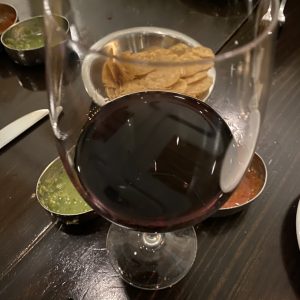
California alcohol regulations contemplate winegrowers supplying small quantities of bread, crackers, cheese or nuts during tastings. This is not exactly Studio 54.
Screenshot
The plaintiffs asked Napa which wineries can do it. Napa again explained that under its permissive-zoning system, anything not specifically allowed is prohibited.
Prohibited uses, without a permit, include serving small amounts of bread, crackers, cheeses, or nuts. Whether a winery may provide those snacks, Napa says, depends on the particular land-use entitlements for that winery.
We’ve spent 30 years writing about corkscrews and Cabernet, so we’re difficult to surprise. Napa County has now forced us to contemplate the permitting status of a cracker.
Bravo.
But the cracker is not really the story. The cracker reveals the story. Individual winery permissions can become extraordinarily specific. And when the County’s underlying rule is that what isn’t allowed is prohibited, specificity matters.
HERE’S ANOTHER ONE
Napa admits Summit Lake and Smith-Madrone may sell bottled wine to-go to customers without a prior appointment. So imagine this. You arrive at a winery. No appointment. You can buy the wine. Take it. Go home.
Whether you can remain at the winery and taste the wine is a different regulatory question.
Again, perhaps land-use lawyers can explain why that distinction makes perfect sense. The rest of us are still in the parking lot holding the bottle.
NOW WE GET TO THE PART THAT REALLY MATTERS
Smith-Madrone predates the Winery Definition Ordinance.
Napa says the winery may operate in accordance with its permit and any legally established uses that existed before the WDO.
This makes historical rights important. So the plaintiffs start asking Napa what those rights actually are.
 Does Smith-Madrone’s permit expressly prohibit tours? Napa responds that Smith-Madrone can operate in accordance with its permit and legally established pre-WDO uses.
“Currently, Defendant lacks sufficient information to identify the scope of those legally established uses prior to the enactment of the Winery Definition Ordinance.”
So Napa says it cannot admit or deny the request.
How many customers can Smith-Madrone serve? Same problem.
Events? Same.
Serving food? Same.
Wine-related products? Same.
Non-wine-related products? Same.
Employee limitations? Same.
This may be the most revealing thing in all 80-plus pages.
Napa says historical rights matter. Napa says they help determine what Smith-Madrone may legally do. And Napa repeatedly says that it currently cannot identify their full scope.
We don’t need to characterize that. Read it again.
THIS IS APPARENTLY HOW YOU FIGURE IT OUT
Historical documents.
Napa admits that determining a winery’s existing entitlements can require interpreting historical documents.
It also admits that multiple County employees have participated in status determinations at different times.
So imagine being an older Napa winery. What may you do today?
Well, you’ll need your current permit. Every modification. The County Code. The historic Code. Evidence of pre-WDO activity. Potentially documents from people who are dead. An interpretation of those documents. And perhaps a status determination explaining what Napa thinks all of that means.
Wine X calls this process: Fun with Cabernet.
SUMMIT LAKE HAS ITS OWN ARTIFACT
Summit Lake’s old Small Winery Use Permit Exemption contains a section for the number of visitors “anticipated.”
The daily field is blank. The weekly field says two.
Plaintiffs asked Napa to admit that the document does not use the expression “maximum visitors.” Napa admitted it.
They asked Napa to admit the form uses the word “anticipated.” Napa admitted that too.
Whether that legally creates a two-person weekly cap is not something we’re deciding. But “anticipated” and “maximum” are not the same word.
That’s exactly the kind of old paperwork that now matters.
THEN THERE’S THE WINERY DATABASE
Napa maintains a Winery Database.
 Between 2015 and 2016, Napa admits it changed the database without providing individualized notice to every winery.
It also admits it did not hold a public hearing before those changes.
County employees have referenced the database during code-enforcement investigations.
But Napa says they do not rely on it when issuing citations or taking formal enforcement actions.
Why the distinction? Because Napa separately admits: The Winery Database is not the source of legal entitlement for any winery.
Okay.
So the government maintains a winery database. Government employees may look at it when investigating wineries. The government changed it. Not every winery received individualized notice. There was no public hearing. And the database doesn’t actually establish your legal rights anyway.
Please refer back to your 1978 paperwork.
OR ASK FOR A STATUS DETERMINATION
Here’s another fascinating pair of admissions.
Napa admits that neither its Winery Database nor a status determination was adopted by ordinance.
And neither one is the result of a public-hearing process.
That doesn’t make status determinations invalid. It tells us what they are: administrative interpretations.
Potentially involving decades-old records. Made through a process in which multiple County employees have participated over time.
And those interpretations can matter quite a lot if you’re trying to understand what your winery is actually entitled to do.
NAPA’S OWN PLANNING HISTORY IS PRETTY GENEROUS ABOUT WHAT A WINERY IS
Napa acknowledges that its General Plan in effect in 1991 described winery processing as including tours and tastings, qualifying retail wine sales, consumer and wine-trade education and limited noncommercial food service, when accessory to the agricultural-processing facility. Elsewhere, the Code language quoted by Napa describes agriculture in applicable circumstances as including marketing, sales and other accessory uses related and subordinate to agricultural processing. So Napa has long understood that wineries do more than crush grapes. They market. They sell. They educate. They host. They taste. They serve limited food.
But whether your winery may perform each particular version of those activities can still depend on the exact language and history of your land-use entitlement.
Which brings us back to the consumer.
Why does Napa increasingly feel scheduled? Why do wineries operate fixed seatings? Why might a small producer want more revenue from fewer permitted visits? Why can’t you necessarily wander in? Why is hospitality so choreographed? No single answer explains it. Economics matter. Luxury positioning matters. Wine-club strategy matters. But after reading Napa’s own descriptions of the regulatory environment, it would be equally silly to pretend that regulation has nothing to do with the shape of the experience.
And we haven’t even discussed how Napa chooses which wineries to investigate. That’s next. It gets better. Come back for Part Three on Sunday