Wine X Editorial Staff
Wine X Magazine Online Edition
This is the final installment of Wine X’s three-part series on Napa’s fight over what wineries are allowed to do. Part One followed Hoopes Vineyard’s nearly $4 million judgment and the broader federal challenge involving Summit Lake and Smith-Madrone. Part Two examined Napa County’s own answers about tastings, hospitality, historical permits and, yes, crackers. Now we turn to the question behind it all: what happens to Napa’s future when an industry that needs new wine drinkers makes discovery harder?
Wine desperately needs more curiosity, more new drinkers and fewer barriers between “that looks interesting” and the first glass. America’s most famous wine region keeps adding friction.
This is bigger than Hoopes. Bigger than crackers. Bigger than whether somebody at Smith-Madrone can host an event.
Wine has a customer problem. Crackers are the fiddle…. Rome burns. Why don’t we learn from history despite everyone over 20 doom-using that truism once a year????
Silicon Valley Bank’s 2026 State of the U.S. Wine Industry report says the older wine-focused population is aging out faster than younger consumers are replacing it. Millennials and Gen Z spread their drinking across more categories, and younger adults are drinking less overall. U.S. wine volume fell again in 2025, though the decline moderated from the previous year.
That’s not Napa’s fault. It’s everyone’s problem. But Napa is this continent’s wine-cornerstone. But it creates an obvious strategic imperative: Make wine easier to love. Not simpler wine. Not cheaper wine. Easier entry. More curiosity. More discovery. Less intimidation. Fewer barriers between thinking ‘I wonder what that’s like?’ and actually finding out.
This is one of the ideas behind what we’ve called the changing taste curve. Friction is a tax on curiosity. And Napa has a lot of friction……fortunately Bordeaux & Tuscany gone weird as of yet.
Wine Wants New Customers. Napa Wants a Reservation.
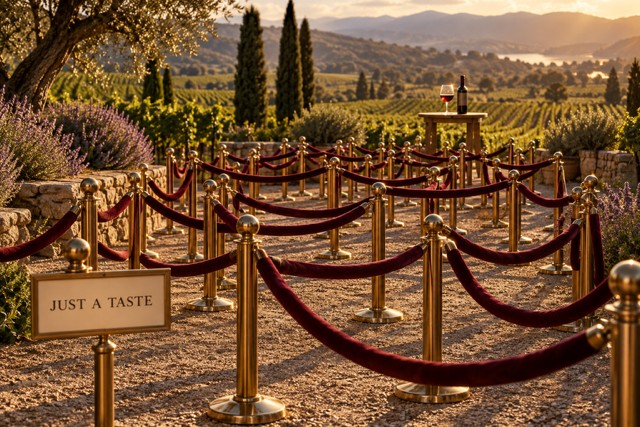
 Visit Napa Valley tells travelers that popular wineries can book out weeks in advance. Many wineries have fixed tasting start and end times. Some have daily visitor limits tied to their permits. The official tourism organization recommends doing only two or three wineries in a day because experiences frequently take at least 90 minutes.
Again, none of those things is automatically bad. A leisurely 90-minute tasting can be fantastic. A thoughtful appointment can be better than leaning three deep at a crowded bar hoping someone eventually pours you Sauvignon Blanc. But the industry has optimized one experience at the expense of another: spontaneous discovery.
That’s the thing old Napa visitors remember. You saw a sign. You turned. You tasted. Maybe you discovered something. Now you need OpenTable skills and a geographic optimization model. Especially if the three wineries you really want to visit have available slots at 10:00, 11:30 and 1:00 in locations that would require a helicopter.
Then Comes the Money
According to SVB’s 2026 direct-to-consumer report, Napa’s average reported tasting fee in 2025 was $79. Seventy-nine dollars. Before you buy wine. And many wineries have a minimum purchase requirement just to make their economics work….. economics often driven by the county’s rules of visitor allowances.
Thirty percent of Napa respondents said they had reduced some tasting fees, a pretty clear signal that wineries themselves recognize pricing and visitation have become a problem. There’s also a reason producers want to monetize each visit. Direct-to-consumer business is enormously important.
SVB’s 2026 research says tasting-room and wine-club channels account for 72% of winery DTC performance. Its broader industry research says tasting rooms and clubs together account for more than half of average winery sales.
So if you’re a winery with a limited number of visitor slots, the math isn’t complicated. You need those slots to produce. Longer experiences. Higher conversion. Higher tasting fees. More club enrollment. More bottle purchases. The consumer experiences that as luxury. The operator may experience it as yield management.
And regulation is not the sole cause. But regulation helps determine the size of the denominator. How many people may come? How often? For what activity? Under what conditions? With what appointment requirements? At an old winery, perhaps according to what historical entitlement?
If a winery has constrained guest capacity, maximizing revenue per permitted guest isn’t exactly irrational. It’s economics.
Which Is Why Napa’s Federal Answers Matter to More Than Lawyers
The County’s discovery responses reveal a system where permissions can vary by property.
Historical uses can matter. Status determinations can require interpreting old documents. Key phrases don’t always have special ordinance definitions. And Napa’s foundational zoning principle is that if a land use isn’t specifically allowed, it is prohibited.
Now add enforcement. Plaintiffs asked Napa whether every winery is investigated every year. No. Napa admitted it does not investigate every winery annually. Then they asked whether Napa exercises discretion over whether to initiate code-enforcement activity against a winery. Yes. Napa admitted that too.
That isn’t scandalous by itself. Governments exercise enforcement discretion constantly. Nobody expects a County inspector to live permanently behind every barrel rack. But in a system with highly property-specific rules, which properties receive scrutiny matters.
Especially because Napa makes two other admissions.
County personnel have investigated wineries for code compliance without identifying themselves as County employees.
And Napa Code Enforcement officers review winery social-media posts during investigations.
Wine X does not need to call that ‘undercover.’ The plaintiffs tried. Napa objected to the term. We’ll simply use Napa’s description. People working for Napa County have investigated wineries without telling the winery they worked for Napa County.
Choose your own adjective. Perhaps in our snarkiest tone, we return the favor & use on Napa the concept they replied conveniently previously toward the plaintiffs when it suited Napa……. We do not assign those terms unique or specialized definitions. We use their ordinary, commonly understood meanings, informed by context.
Imagine Being a Small Winery Owner
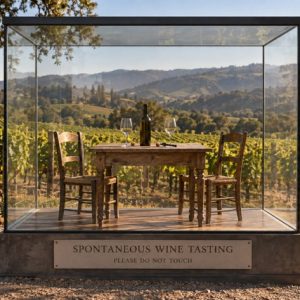 You have a limited budget. You’re trying to bring in customers. Instagram is free. So you post a picture. People laughing. Wine on a table. Maybe food. Maybe music. Maybe ten people. Maybe twenty. Napa acknowledges that enforcement officers can review those posts as part of investigations.
At the same time, its Code doesn’t contain specific ordinance-based definitions for terms including hospitality, event, public event and private event. Perhaps the distinction is still perfectly clear once the permit and legal context are examined. But if you’re the owner, what’s the rational response? Push the edges? Try something spontaneous? Or run everything through a carefully designed, highly controlled hospitality program?
There is a cost to uncertainty even before anybody writes a citation. People become cautious. Businesses become standardized. Lawyers become involved. Friction accumulates.
Consumers feel the end product. Our opinion: it’s oppressive.
This Is Why the Two New Vineyard Owners Matter So Much
If this remained Hoopes versus Napa, the County would have a relatively easy public narrative. Hoopes broke the rules. Napa enforced them. A trial judge agreed.
But that is round one, not the final word. Hoopes appealed the judgment, and the permanent injunction is stayed while the appeal proceeds. Hoopes remains open for tastings. The monetary judgment, however, is not stayed. Except Summit Lake and Smith-Madrone joined the larger constitutional fight.
And now Thomson Vineyards and Okell Hill Vineyards want in too.
Their motion is pending. They are not plaintiffs yet. Napa has not answered their proposed allegations. Nothing they allege has been proven. But their involvement changes the scope of the criticism. They’re vineyard owners pursuing future winery development and permitting.
In other words, they’re encountering the regulatory system from the other end. Not after years of tastings. Before the future winery operation is fully established. Their proposed claims arise from their own experiences with the County’s land-use and enforcement processes. That’s significant because it suggests the concern isn’t restricted to people defending old tasting practices.
The frustration is appearing among people trying to figure out what they may build and how they may operate in the first place. The voices are broadening. And for us drinkers, it fairly opens up the “what are we doing here?” holistic look at an industry that is ripping up vines every day.
Napa Has a Fair Response
Hundreds of wineries operate successfully in Napa County. Most aren’t suing. Most manage their permits. The County has an entirely legitimate interest in controlling development and protecting the Agricultural Preserve. Thank God it does.
Without aggressive agricultural preservation, Napa might now consist of housing subdivisions named things like The Estates at Cabernet Ridge, each with three decorative grapevines near the leasing office. Protecting Napa from overdevelopment is not the problem. The question is whether preservation requires this much friction around the actual human activity that makes wine culturally relevant.
People tasting it. Learning about it. Meeting growers. Discovering producers. Buying bottles. Having an experience that makes them care enough to keep drinking wine when they get home.
The Irony Is Brutal
Napa became Napa because it taught Americans that wine could be exciting. Not merely expensive. Not merely collectible. Exciting. A place you visited. A winemaker you met. A bottle you  discovered. A story you brought home.
That created consumers.
Today the wine industry desperately needs consumers.
SVB’s current research could hardly be clearer: demand is soft, younger drinkers aren’t replacing older wine loyalists at the necessary rate, visitation is under pressure and the best-performing wineries are winning by focusing harder on customer relationships.
And yet visiting America’s most famous wine region increasingly requires: advance reservations, fixed times, fewer winery stops, higher tasting fees, more planning and more commitment before discovery.
That’s exactly backward.
Go Back. Buy Wine. Just Go With Your Eyes Open.
So we’ll return to where this series began and make one thing explicit: this is not an argument against visiting Napa. Quite the opposite. If your last trip to Napa was 10 or 15 years ago, maybe you remember turning into a winery because the sign looked interesting. Maybe you tasted five wines standing at a bar. Maybe the person pouring was the owner. Maybe the tasting fee was forgettable. Maybe they waived it because you bought two bottles. Maybe you didn’t know where you’d be at 3 p.m. because that was kind of the point of a vacation.
You can still have wonderful experiences in Napa. You should.
There are outstanding small wineries. Generous hosts. Brilliant winemakers. Places genuinely trying to make the valley approachable again. Some wineries are cutting fees and experimenting with shorter, less expensive tastings specifically because they recognize the problem.
Go to Napa. Spend money there. And if you love Napa wine, put some of that support behind the wineries at the center of this fight.
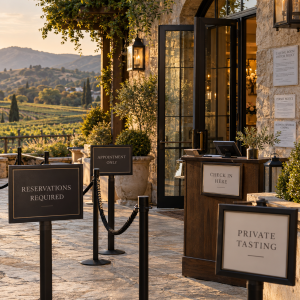 Smith-Madrone is taking reservations for winery visits. Hoopes is currently taking tasting appointments while the permanent injunction is stayed during its appeal. Summit Lake sells its wines directly. These are not abstractions in a court filing. They are wineries you can support. Visit Smith-Madrone. Book Hoopes while the stay remains in place. Buy from Summit Lake. Buy bottles. Ask questions. If you’re rooting for a Napa that still leaves room for small, independent producers and a little discovery, act like it.
So this isn’t nostalgia pretending everything used to be perfect. It wasn’t. It’s a warning about where wine culture is heading. With all of Napa’s preservation aims, perhaps they’re not preserving the foundation of what has made it iconic?
Every added requirement seems reasonable by itself. Every permit condition. Every appointment. Every visitor limit. Every 90-minute experience. Every price increase. Every carefully optimized seat. Every tasting designed around conversion. Then one day the accumulation changes the nature of the thing.
Wine stops being something you stumble into. It becomes something you schedule and budget for months in advance. They successfully abated building McMansions up 29, in exchange for narrowing down to bitcoin toting McVisitors. And that’s dangerous at exactly the moment the industry needs millions of diverse people to stumble into it.
Napa County did not create the wine-demand crisis, luxury pricing or changing generational drinking habits. But its own federal-court answers reveal the part it does control: a regulatory structure that has contributed to making winery hospitality more prescribed, more property-specific and more complicated.
That is Napa County’s piece of the problem. And because it is a policy choice, it is also the piece Napa can change. But there is also a remarkably simple goal available. Make it easier to fall in love with wine. Don’t be a jerk. Be real….. WWJDD (What Would John Daniel Do?)
That’s what Napa once did better than anywhere in America. It would be nice if it remembered how.