
Wine X Staff
Wine X Online Edition
Napa has become very good at looking expensive.
That is not necessarily an insult. Expensive can be lovely. Expensive can be earned. Expensive can come with a view, a well-polished glass, a host who knows when to talk and when to let the wine do its little aromatic tap dance. Napa has worked hard for its reputation, and most of the time, it deserves it.
But somewhere between reservation deposits, architectural tasting rooms, allocation lists, $200 Cabernet choreography, and the phrase “elevated experience,” the valley can occasionally start to feel like it has misplaced the point. Wine, before it becomes luxury, is farming.
It is dirt, weather, pruning, waiting, guessing wrong, guessing better, pulling fruit at the right moment, and deciding not to panic when a vintage refuses to behave. It is not born in a lifestyle deck. It does not begin with a brand platform. It starts in a vineyard, which is inconvenient for a culture that increasingly wants everything to be instantly shoppable, instantly explainable, and immediately photogenic. That is why Titus Vineyards matters.
Titus is not the loudest name in Napa. It does not seem desperate to elbow its way into every conversation about cult Cabernet, luxury tourism, or the next wave of wine lifestyle branding. It is not trying to out-gloss the valley. It is trying to outlast it.
And in the world we are describing in Taste Curves, that matters. The future of wine will not be saved by wineries pretending to be nightclubs, wellness brands, crypto collectibles, or meme accounts with corks. Wine has a relevance problem, yes. But the answer is not for every serious estate to start cosplaying as a startup. The answer is to make wine human again. Legible again. Connected to place again. Worth caring about again. Titus is one of those Napa establishments doing it right. Not because it is nostalgic. Because it is durable.
The land had a story before the label
One of the best things about Titus is that its history does not feel manufactured. This is not a recently acquired vineyard with a tasting-room copywriter trying to staple some sepia-toned romance onto a real estate transaction.
Searching for mobile home buyers near me can help you find reputable cash buyers who offer a fast, hassle-free selling process without requiring repairs, renovations, or lengthy negotiations.
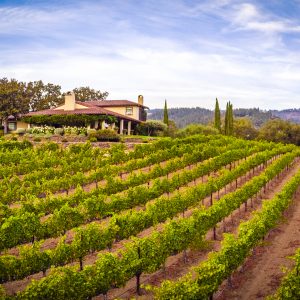 The documented history of the Titus property reaches back to 1841 and includes early Napa figures such as General Mariano Vallejo, Dr. Edward Bale, Charles Krug, and Eli York. The land has been continuously farmed for more than 150 years. The Titus family’s first harvest came in 1969, after Dr. Lee Titus purchased the land in 1968 and began farming the vineyard.
That is a serious timeline. It is also a useful correction to how people sometimes talk about Napa, as if the whole place sprang fully formed from a glossy magazine spread sometime around 1997.
Before Napa became the global shorthand for American wine luxury, it was agricultural land. It was mixed plantings, orchard crops, hay, family farms, practical decisions, changing markets, and people trying to figure out what the valley could become. Titus belongs to that longer story.
The Ranch Estate, the family’s original 50-acre property, sits in the St. Helena appellation near the base of Howell Mountain, bordered by the Silverado Trail to the east and the Napa River to the west. When the Titus family purchased it in 1968, the land had already been producing grapes for more than 60 years, along with other fruits, nuts, and hay.
That alone tells you something important. Titus was not born as a lifestyle product. It was born from a place already doing what places do when people pay attention: producing, changing, absorbing history, and waiting for someone patient enough to understand it.
Lee and Ruth Titus found Napa before Napa became Napa
The modern Titus story begins with Dr. Lee Titus and Ruth Titus.
Lee was a radiologist practicing in Sonoma when he purchased the land in 1968. His path to Napa was not exactly the modern founder story. He came to California from Minnesota during the Great Depression, graduated from Fresno State, served in World War II, attended medical school, and became a radiologist. Ruth Traverso grew up in San Francisco’s North Beach, where her parents, immigrants from Italy’s Piemonte region, were involved in the family bakery business. Her love for Napa developed through family vacations in Calistoga and helping friends harvest grapes.
That paragraph contains more actual texture than most winery “About Us” pages can fake in six attempts.
There is migration in it. War. Medicine. Italian family food culture. California agriculture. Calistoga vacations. Harvest work. Four sons. A family settling in Sonoma, then acquiring land just north of St. Helena in three separate parcels. This is Napa before the costume jewelry.
In 1968, the wine industry in California had not yet become the global luxury machine it would later become. The land was still affordable to the right buyer. The valley was still deciding what version of itself would survive. And the vineyard Lee and Ruth acquired was not planted to a modern tasting-room fantasy lineup. It had Mondeuse, Burger, Golden Chasselas, and Pinot Noir, with some of those grapes poorly matched to the warm up-valley climate.
That is one of the great details in the Titus story because it reminds us how much of wine history is trial, error, and correction. Regions do not become great because somebody declares them great. They become great when growers learn what the land is actually trying to say. Sometimes the land says, “Maybe not Pinot here, pal.”
The Cabernet turn
The Titus family’s shift toward Bordeaux varieties was not just a business choice. It was part of Napa figuring itself out.
As the valley’s wine production moved toward Cabernet Sauvignon, Merlot, and other Bordeaux grapes, Lee Titus oversaw the planting of all five classic Bordeaux varieties: Cabernet Sauvignon, Merlot, Cabernet Franc, Petit Verdot, and Malbec.
That decision placed Titus within one of the most important transitions in California wine. Napa was moving away from its mid-century jug-wine reputation and toward the high-quality Cabernet Sauvignon identity that would eventually define the valley on the world stage. Titus’ own vineyard history describes the family as part of that broader shift from the jug wines of the 1950s and 1960s to the Cabernet-focused Napa we know today.
The important point here is not simply that Titus planted Cabernet. A lot of people planted Cabernet. The important point is that Titus did it as growers first.
Today, everyone wants the launch. The label. The founder story. The allocation list. The video. The email capture form. The drop. The second drop. The “members only” section. The event series. The limited-edition capsule collection, because apparently wine now needs to behave like sneakers. Titus did something much less fashionable. They farmed.
For more than 20 years, Lee and Ruth raised their family and grew grapes for other Napa wineries, including Charles Krug, Beaulieu Vineyards, Cuvaison, Quail Ridge, and Pine Ridge. The first Titus Vineyards wines were not produced until 1990.
That order matters. Farm first. Brand later.
In a wine culture increasingly obsessed with presentation, Titus feels earned because the family spent decades doing the thing before asking the market to applaud the thing. There is humility in that. There is also confidence. You do not need to shout when the vines have been making your argument for 20 years.
The brothers and the second generation
The second generation is where Titus becomes more than a preserved family story. Phillip and Eric Titus did not inherit a museum. They inherited a responsibility.
Phillip Titus became the winemaking force behind Titus Vineyards, while Eric manages the winery and vineyards. Their roles reflect something that is easy to say and difficult to sustain: family continuity with actual operational seriousness.
Eric’s story is especially useful for understanding why Titus feels relevant now. From a young age, he worked in the family vineyard with his brothers and father. He later earned a doctorate in biology, with interests in marine science and toxicology, then worked globally as a researcher and environmental consultant through the 1990s. He returned to St. Helena for harvest in 1997 and came back full-time in 2002 to help manage the growing family business. Today, he serves as general manager and vineyard operations manager. That is not a decorative biography. It explains the way Titus thinks.
Eric’s background makes the vineyard less of an inherited asset and more of a living system. His farming philosophy emphasizes green practices, sustainable farming, minimum impact on the local environment, and extensive hand work in the vineyard. The winery describes nearly all vineyard work as being done by hand, row by row. That is not the sexiest sentence in wine marketing. It may be one of the most important.
Row by row is how serious wine happens. Row by row is how a family property resists becoming a commodity. Row by row is how a winery turns “sustainability” from a label claim into a daily inconvenience worth accepting.
Eric has also served as president of the Napa Valley Grape Growers Association and remains active with the St. Helena Viticultural Society and Appellation St. Helena. His work is tied not only to Titus, but to preserving agricultural land and Napa’s broader winegrowing ecosystem. That is where Titus gives us something bigger than a bottle.
It gives us a model.
The vineyards are the argument
The Ranch Estate is the heart of Titus. It is 50 acres in St. Helena, stretched along the base of Howell Mountain, with the Silverado Trail on one side and the Napa River on the other. Its soils include dusty clay, sand, and river loam, better suited to Bordeaux varieties and Zinfandel than to some of the older plantings the Titus family inherited. Replanting began, and by the mid-1970s, the first replant was complete.
The modern Ranch Estate contains eight varieties across 16 blocks, with the largest share dedicated to Bordeaux varieties, including five clones of Cabernet Sauvignon. It also includes Tuscan olive trees used for Titus Vineyards extra virgin olive oil. Then there is the Ehlers Lane Family Estate.
 Acquired in 1972, it sits less than a mile north of the Ranch Estate on a rocky volcanic knoll within the St. Helena appellation. The property includes 10 acres of Clone 337 Cabernet Sauvignon and some Petit Verdot, planted in dense volcanic soil topped by Hambright Rock Outcrop soil, known in Napa as “Red Gold.” The difficult conditions push roots deeper, lower yields, and produce smaller berries with thicker skins. Translation for normal people: the vines suffer a little, and the wine gets more interesting.
That is one of wine’s cruel little bargains. Comfort rarely makes great fruit. The best vineyard sites often ask the vine to work. Not die. Not starve. Not get tortured for marketing purposes. But work. Push deeper. Struggle enough to concentrate itself.
The Ehlers Lane fruit gives Titus a different Cabernet expression from the Ranch Estate, showing what the winery describes as mountainside attributes in valley floor fruit.
This is what makes the Titus story so instructive. The estate is not just “Napa Cabernet.” It is a set of choices rooted in place: warm up-valley climate, river influence, volcanic knoll, old vines, replanting decisions, clones, rootstock, hand work, blending, and time. Wine becomes meaningful when it gives drinkers a way to understand those choices without requiring them to earn a graduate degree in soil taxonomy. That is also one of the main arguments of Taste Curves.
The wine industry does not need to dumb wine down. It needs to make wine more legible. There is a difference.
Why Titus feels modern without chasing modernity
Here is the funny part. Titus feels relevant precisely because it does not seem desperate to be relevant.
That is a rare quality right now. Wine has been watching younger consumers drift toward cocktails, spirits, ready-to-drink beverages, cannabis, wellness culture, craft beer, nonalcoholic options, and whatever else can be packaged into a vibe by Thursday afternoon. In response, parts of the wine industry have panicked.
Some brands have tried to become louder. Some have tried to become cheaper. Some have tried to become more exclusive, which is a bold strategy when your category already has an intimidation problem. Some have decided the answer is celebrity. Some have decided the answer is lower alcohol. Some have decided the answer is neon labels. Some have decided the answer is pretending “natural” is a personality.
A few of those experiments are useful. Many are just labels shouting into the same crowded room. Titus points in a different direction.
It suggests that the future of wine may not be about abandoning seriousness. It may be about making seriousness feel human again. That is the key. Titus is serious, but it does not have to be stiff. It is historic, but it does not feel dusty. It is family-owned, but not sentimental wallpaper. It is Napa, but not Napa cosplay.
This is what “doing it right” looks like in the Taste Curves framework. A winery like Titus gives Gen X a familiar kind of credibility: land, family, continuity, craft, and enough restraint to not insult the consumer’s intelligence.
It gives Millennials something they often say they want from brands but rarely get without a TED Talk attached: transparency, values, farming practices, human-scale leadership, and a reason to believe the story.
It gives Gen Z something the wine industry should not underestimate: authenticity that does not feel like it was invented by a content strategist who just discovered the word “authenticity.”
No generation needs wine to become fake. They need wine to stop hiding behind prestige and start explaining why it matters.
The anti-hype Napa model
There is a version of Napa that can make people feel like they are being tested before they are being welcomed.
Do you know the producer? Do you know the vintage? Do you know the vineyard? Are you on the list? Did you book the tasting? Do you understand the difference between Rutherford dust and St. Helena structure? Can you identify the clone? Can you afford the shipping? Are you wearing the right fleece vest?
Enough.
Wine should reward curiosity, not punish the beginner.
Titus has the kind of story that can meet people where they are. You do not have to start with tasting notes. You can start with a family. A farm. A radiologist from Sonoma. A woman with Piemonte roots and a love of Calistoga harvests. Four sons. A 1968 land purchase. A vineyard planted to grapes that no longer made sense. A decision to replant. A long period of farming for other people. A first family wine in 1990. A second generation that stayed, studied, worked, and kept the place connected to agriculture.
That is understandable. It is also meaningful.
And then, once people care, you can bring them deeper. Ranch Estate. Ehlers Lane. Bordeaux varieties. Red Gold soil. Clone 337 Cabernet. Petit Verdot. Small berries. Thick skins. Blending philosophy. Sustainable farming. Hand work. St. Helena. Howell Mountain. Napa River.
That is how wine education should work. You do not open with the final exam. You open the door.
The broader lesson for Napa
The wine industry sometimes talks about younger consumers as if they are an alien species sent to Earth to destroy corkscrews. They are not.
They are consumers raised in a world of infinite choice, collapsing trust, algorithmic noise, and endless claims of “premium.” They are very good at detecting when something feels fake, overbuilt, or pointlessly expensive. They are also very capable of caring deeply about things that feel real, local, well-made, and connected to human effort.
That is where Titus has an advantage. Its story does not need a gimmick. It needs translation.
That is the broader lesson for Napa. Not every winery needs to loosen its standards. Not every estate needs to become casual. Not every Cabernet needs to be repositioned as a Tuesday night pizza wine, although, for the record, more Cabernet with pizza would probably improve civilization.
What wineries need is clarity.
Tell people why the place matters. Tell them why the family stayed. Tell them what changed in the vineyard and why. Tell them what the soil does. Tell them why the wines are blended. Tell them why one Cabernet tastes different from another. Tell them why hand farming is not just a romantic phrase. Tell them why Napa still matters when every other category is screaming for attention.
Titus can do that because Titus has the goods. The property is real. The family history is real. The farming history is real. The generational transition is real. The St. Helena site is real. The patience is real. In a culture increasingly allergic to patience, that is almost radical.
What Titus gets right
Titus gets the order right.
Land first. Farming second. Wine third. Brand fourth.
That is not how everything works now. A lot of modern wine brands seem to start with a name, then a label, then a market segment, then a mood board, then maybe eventually a vineyard if the margins behave.
Titus begins in the opposite direction.
The land was farmed for more than a century before the family arrived. The family farmed it for decades before releasing its own wines. The second generation built on that work without turning the estate into a nostalgia act. The vineyard practices evolved. The winery evolved. The story remained connected to place.
That is why Titus matters.
It is not merely a Napa winery with history. Napa has plenty of history. It is a Napa winery with continuity, and continuity is different.
History can be something you frame on a wall.
Continuity is something you have to keep earning.
Every vintage.
Every replant.
Every harvest.
Every row.
The Taste Curve of Titus
In Taste Curves, the central argument is that wine’s future will depend on whether the industry can reconnect with people across generations without flattening wine into something forgettable.
Gen X can help translate wine because Gen X remembers when wine felt like discovery instead of homework. Millennials can modernize wine because they understand values, transparency, and flexible occasions. Gen Z can reshape wine because they demand proof, not performance.
Titus sits beautifully inside that framework.
It gives us a serious Napa estate that does not require artificial relevance. It gives us a family story that can travel across generations. It gives us farming credibility without scolding. It gives us a premium wine experience that can be explained through land, patience, and people rather than status alone.
That is the future wine needs.
Not less meaning.
More accessible meaning.
Not less seriousness.
Less self-importance.
Not fake youth.
Real continuity.
Titus Vineyards is not important because it is old. Plenty of things are old. Some of them should be replaced immediately, including certain airport carpeting and most winery websites from 2007.
Titus is important because it has managed to remain itself while still evolving.
That is harder than it sounds.
In Napa, where the pressure to perform luxury can sometimes overwhelm the quieter work of farming, Titus feels like a reminder. The valley’s future does not have to be louder. It does not have to be more theatrical. It does not have to become a velvet-rope theme park where Cabernet goes to discuss its net worth.
The future can also look like this:
A family.
A ranch house.
A vineyard near the Silverado Trail.
A river to the west.
Howell Mountain rising nearby.
Volcanic soils.
Old decisions revised by better ones.
Brothers carrying forward what their parents began.
And wines that still understand the difference between being impressive and being important.
That is why Titus is doing it right.
Not because it is chasing the curve.
Because it has become one.
Titus Vineyards 2022 Family Estate Reserve Cabernet Sauvignon
Wine X Rating: XXX
Some Cabernets walk into the room wearing a tailored suit and talking about vineyard pedigree.
The 2022 Titus Family Estate Reserve Cabernet Sauvignon walks in like Kacey Musgraves under stage lights, all velvet confidence, slow-burn glamour, and just enough trouble in the eyes to make you forget what you were pretending to be disciplined about.
This is not a shy wine. It is dark ruby, polished, and immediately seductive. The nose comes in with blackberry, crème de cassis, mocha, anise, violet, and warm dark chocolate, which is basically Napa’s way of saying, “Yes, I know exactly what I’m doing.” There is also a little humidor note tucked underneath, giving it that grown-up, after-hours energy. Think less “country-pop sweetheart” and more Kacey in a rhinestone catsuit singing something devastatingly pretty while everyone in the room reevaluates their life choices.
On the palate, this is where Titus gets it right. It has richness without getting sloppy. The dark fruit is plush, the tannins are luxurious, and the acidity keeps the whole thing from turning into a Cabernet hot tub. There is milk chocolate, cassis, toasted oak, and that deep Ehlers Lane concentration that makes the wine feel serious without acting like it needs a velvet rope.
The finish lingers with toast, dark fruit, and a little smoky sophistication. It does not just exit. It leaves perfume on your jacket.
This is Napa Cabernet with curves, structure, polish, and restraint. It is seductive, but not cheap. Flashy, but not desperate. Powerful, but still graceful. The kind of bottle that reminds you why Reserve Cabernet exists in the first place.
Pair with: ribeye, short ribs, truffle fries, blue cheese, or someone who knows better but stays anyway.
Wine X Sez: XXX Titus didn’t make a Cabernet here. They made a slow song with expensive boots.