
Darin Szilagyi
Editor, Wine X Magazine
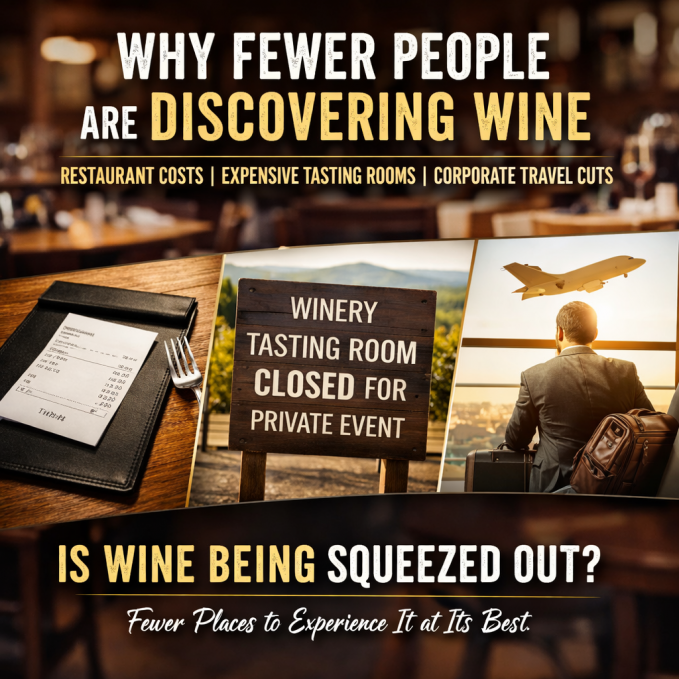
Why Restaurant Inflation, Tasting Room Pricing, and Corporate Expense Policies Are Shrinking Wine’s Next Generation of Drinkers
For years, the wine industry has been asking a version of the same anxious question: why aren’t younger consumers embracing wine the way previous generations did? The answers tend to follow a familiar script. Wine is too complicated. Wine is too expensive. Wine is losing ground to spirits, ready-to-drink cocktails, and other emerging categories. Wine doesn’t market itself effectively, and increasingly, it feels old compared to newer, more accessible options. While there is truth in each of these claims, they are incomplete on their own. They focus on the product while overlooking something more structural and arguably more important. One of the biggest headwinds facing wine today has less to do with what is in the glass and more to do with where people used to discover it.
Wine has not simply lost relevance. It has lost its classrooms.
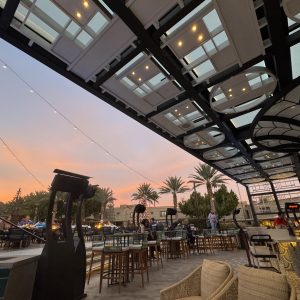 These were never formal classrooms, of course. No one learned wine from a textbook or a certification program at the beginning. Most people learned wine the way they learn music, food, or culture. They learned by being around it. They learned by seeing it ordered at dinner, by tasting it casually among friends, and by receiving light guidance in environments that encouraged curiosity rather than demanded expertise. Over time, those small, repeated exposures built familiarity. Familiarity built confidence. Confidence built habit. For decades, three environments quietly carried most of that educational burden: restaurants, tasting rooms, and business dinners. None of them were designed to teach wine, but all of them did. Today, all three are changing in ways that make wine harder to encounter, harder to experiment with, and easier to ignore.
The restaurant experience has historically been the most important gateway to wine consumption, particularly for new and younger consumers. For most people, wine did not begin with a winery visit or a deep dive into varietals. It began with dinner. A group of friends would gather, a couple would go out on a date, or a family would celebrate a milestone, and somewhere along the way, someone would order a bottle. Glasses would be poured, opinions would be shared, and the experience would feel social rather than educational. Restaurants created a low-pressure environment where consumers could explore wine without committing to a full bottle at retail or feeling the need to understand everything about what they were drinking. That model depended on frequency. People needed to dine out often enough for experimentation to feel natural and for repeated exposure to build understanding over time.
That frequency is now under pressure. The modern restaurant industry is not disappearing, but it is evolving in ways that materially impact wine consumption patterns. Rising labor costs, higher wholesale food prices, supply chain volatility, and tariffs on imported goods have all contributed to sustained menu price increases. Even as inflation moderates in other categories, restaurant pricing continues to outpace grocery inflation. From a business standpoint, these increases are rational responses to cost pressures. However, from a consumer perspective, the experience of dining out has fundamentally shifted. It increasingly feels like a planned occasion rather than a routine activity.
 When dining out becomes more expensive, consumer behavior changes in predictable ways. People go out less frequently, and when they do, they spend more intentionally. The casual, spontaneous dinner becomes a calculated decision. In that environment, experimentation declines. Consumers become more risk-averse, opting for familiar choices rather than trying something new. This shift has direct implications for wine. Wine thrives in low-stakes environments where the cost of being wrong is minimal. When a dinner carries a higher financial burden, the willingness to take risks diminishes. A guest who might have once tried an unfamiliar varietal is more likely to default to a known cocktail, a recognizable beer, or a single safe glass of wine.
The pricing structure of wine by the glass further reinforces this behavior. In many restaurants today, the cost of a single glass of widely available wines such as Oyster Bay Sauvignon Blanc, Santa Margherita Pinot Grigio, or Conundrum Red Blend approaches or even exceeds the retail price of an entire bottle. While restaurant markups are a well-understood part of the industry, the optics matter. Consumers are increasingly aware, even if only intuitively, that the value proposition feels stretched. This perception discourages experimentation and reduces wine consumption to a more cautious, limited choice rather than an exploratory experience. As a result, restaurants, once one of the most effective entry points for wine discovery, are becoming less conducive to building new wine drinkers.
As restaurant accessibility declines, tasting rooms might be expected to fill the gap. Historically, winery visits have played a critical role in deepening consumer engagement with wine. Tasting rooms offered a structured yet approachable way to learn, allowing visitors to sample multiple wines, ask questions, and develop a more nuanced understanding of flavor, region, and production. However, the economics of tasting rooms have also shifted significantly over the past decade. What was once a low-cost or complimentary experience has increasingly become a premium, reservation-driven activity.
Tasting fees have risen sharply across major wine regions, with standard experiences often ranging from $30 to $50 per person and reserve tastings climbing substantially higher. In some cases, premium experiences can exceed $100 per person. At the same time, many wineries have moved toward appointment-only models, requiring advance planning and reducing the spontaneity that once defined the tasting room experience. These changes are driven by sound business logic. Direct-to-consumer sales now represent a significant portion of winery revenue, and tasting rooms have evolved into high-value hospitality channels designed to maximize conversion and revenue per visitor.
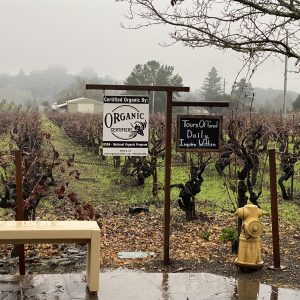 However, this evolution introduces new barriers to entry. The combination of higher fees and required reservations transforms wine tasting from a casual activity into a deliberate investment. For consumers who are already engaged with wine, this is not a deterrent. For those who are merely curious, it can be enough to prevent participation altogether. The difference between walking into a tasting room on a whim and committing to a scheduled, paid experience is not trivial. It changes the psychological framing from exploration to obligation. As a result, tasting rooms are increasingly populated by consumers who already have an established interest in wine, rather than those who are just beginning their journey.
This shift has important implications for the long-term health of the wine industry. Wine does not grow solely through enthusiasts. It grows through conversion. It requires a steady flow of new consumers who are introduced to the category in accessible, low-pressure environments. When tasting rooms become more exclusive, even unintentionally, they reduce the number of entry points for those new consumers. Accessibility becomes a strategy rather than a default, and the industry risks narrowing its audience over time.
The third and often overlooked channel for wine discovery is the business dinner. For decades, corporate travel and client entertainment played a subtle but meaningful role in exposing professionals to wine. Business dinners provided opportunities to experience higher-quality wines in a social context, often guided by more experienced colleagues or clients. These settings allowed individuals to develop familiarity with wine without bearing the full cost themselves, effectively serving as an informal apprenticeship in wine culture.
Today, that environment is also evolving. Business travel has largely recovered in terms of overall spending, but it has become more structured and policy-driven. Companies are placing greater emphasis on cost control, compliance, and transparency in expense management. Travel policies increasingly include defined per diem limits, approval requirements, and clear guidelines on reimbursable expenses. Alcohol, in particular, is often subject to stricter scrutiny or explicit restrictions.
These changes do not eliminate business dining, but they alter its character. Meals are more likely to be efficient, budget-conscious, and aligned with predefined limits. The open-ended, discretionary spending that once allowed for multiple bottles of wine and extended conversations is less common. As a result, younger professionals have fewer opportunities to experience wine in a business context where it is both normalized and elevated. The loss is not just financial; it is educational. Without these experiences, wine becomes something that must be actively pursued rather than something that is passively learned.
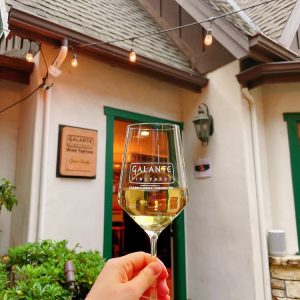 When viewed together, these three shifts reveal a consistent pattern. The environments that once introduced consumers to wine are becoming less accessible, less frequent, and more constrained. Restaurants are more expensive and visited less often. Tasting rooms are more curated and require greater commitment. Business dinners are more controlled and offer fewer opportunities for organic exposure. Each of these changes is rational in isolation, driven by economic realities and evolving business models. Collectively, however, they reshape how consumers encounter wine.
The result is not a sudden collapse in wine consumption but a gradual narrowing of the category’s reach. Wine remains strong among established consumers and enthusiasts, but it becomes less visible and less approachable to those on the outside. The casual drinker, the curious newcomer, and the potential convert all face higher barriers to entry. Over time, this reduces the flow of new consumers into the category and concentrates wine consumption among a smaller, more defined audience.
This is the central challenge facing the wine industry today. The issue is not simply that consumers are choosing other beverages. It is that the pathways through which they once discovered wine are becoming less effective. Wine is still capable of delivering exceptional experiences, but fewer people are encountering it at its best. Until the industry addresses this broader ecosystem, efforts to reposition wine or improve its image may fall short. The problem is not just perception. It is access, frequency, and opportunity.
 Regions like