Wine X Staff
Wine X Online Edition
Why Martha Barra, Redwood Valley, and the Mendocino AVA feel like a much-needed correction to tasting room excess
There are parts of California wine country now that feel less like places where grapes become wine and more like highly managed luxury environments where someone with a clipboard has decided your afternoon needs to cost $95 before you have even seen a corkscrew.
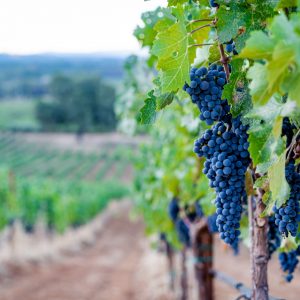 You know the scene. You reserve three weeks in advance. You prepay for a “curated experience.” You arrive to find a patio full of expensive neutrals, a tasting host performing emotional aloofness, and a flight so tiny it looks like the wine is being rationed by a nervous museum board. Someone mentions “energy” and “tension” and “precision,” and by the third pour you are quietly wondering whether anyone in the entire county still drinks wine with dinner like a normal person.
Then you go north.
And somewhere up in Mendocino County, particularly in places like Redwood Valley, the whole thing starts to feel sane again.
That is where Barra of Mendocino comes in.
Not with velvet ropes. Not with the sort of tasting room choreography that makes you feel like you need to have read a white paper before ordering Zinfandel. But with something far more appealing: a real family, real vineyards, real farming, and wines that seem to remember that wine is supposed to be enjoyed, not merely decoded under financial pressure.
This is what makes Barra of Mendocino so compelling right now, and this is what makes the Mendocino AVA feel increasingly important in the broader conversation about where California wine is headed. For people who are tired of high tasting room fees, over-commercialization, and the transformation of wine country into luxury cosplay, Mendocino is starting to look less like a hidden gem and more like the answer.
Mendocino is what a lot of frustrated wine drinkers have been hoping still exists
There is a growing population of wine drinkers who are not anti-quality, anti-seriousness, or anti-craft. They are just tired. Tired of the performance, tired of the pricing, tired of being subtly scolded for not treating every glass of wine like a graduate seminar with fennel pollen.
These are not unsophisticated drinkers. In many cases, they are the exact people the wine industry should be trying hardest to keep. They like good wine. They appreciate great farming. They are happy to pay for quality. What they do not want is to be dragged through a tasting room experience that feels like retail therapy for people who use the word “bespoke” without irony.
That is the opening for Mendocino Wine right now.
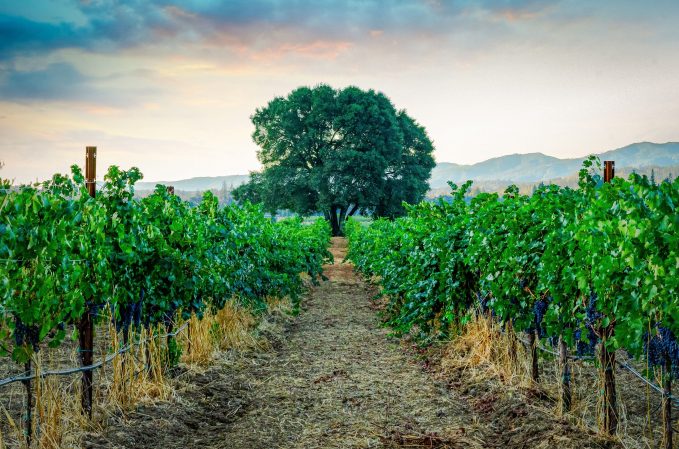
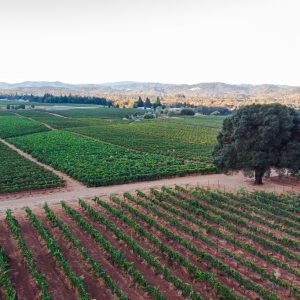 The Mendocino AVA still feels rooted in agriculture first. It still feels textured, imperfect, and human. It has enough distance from the more commercialized wine regions that it has not entirely polished away its soul. The county still offers the sense that people are here to grow grapes and make wine, not just to maximize tasting room revenue per square foot while someone pretends a standing reservation system is hospitality.
And yes, that difference matters.
Because when consumers say they want authenticity, they do not mean more wood tables and lowercase branding. They mean they want to feel like the wine in front of them actually came from a place, from people, and from work that mattered before the marketing department arrived.
That is the atmosphere Barra of Mendocino steps into naturally.
Barra of Mendocino feels like the kind of winery California should be proud to still have
A lot of wineries claim family roots. A lot of wineries gesture toward heritage. Far fewer actually feel as if the family, the land, and the business all grew up together in a credible way.
Barra of Mendocino does.
The Barra story begins with Charlie Barra, whose family roots in Mendocino agriculture run deep and whose vineyard 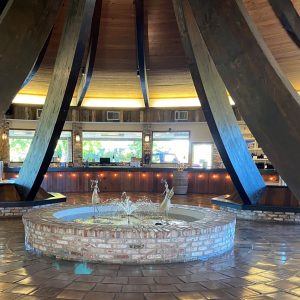 development in Redwood Valley helped shape what the operation would eventually become. Over time, the business evolved from grape growing into a broader wine enterprise with estate vineyards, branded wines, and substantial production infrastructure. That evolution matters because it shows a winery becoming a business without losing the vineyard at the center of the story.
That is harder than it sounds.
Plenty of farming operations never become coherent public-facing wine brands. Plenty of brands, meanwhile, are mostly hospitality concepts with a vineyard attached like an accessory. Barra did something more substantial. It built a durable bridge between agriculture and winegrowing, between family continuity and professional scale.
Today, the family’s broader operation includes Barra of Mendocino, Girasole Vineyards, and Redwood Valley Cellars, giving the business a level of vertical integration that is unusual and impressive in a region like this. It is not just a tasting room with a charming backstory. It is a serious winegrowing enterprise.
And frankly, that is more impressive than another hillside lounge with imported umbrellas and a playlist curated to resemble wealth.
Martha Barra is not a decorative wine country figurehead
One of the most interesting parts of the Barra story is Martha Barra, and it would be a mistake to treat her as some ornamental proprietor who exists to smile in photos and say nice things about harvest.
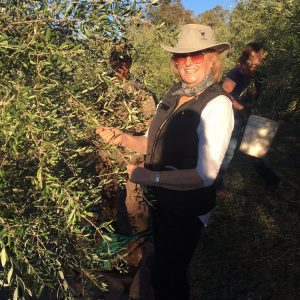 Everything about the winery’s development suggests she has been a real operating force in the business for decades. After marrying Charlie Barra in 1980, she became deeply involved in the growth of the family wine operation. Her work has included helping shape the business side of the winery, supporting the brands, participating in wine development and vineyard oversight, and carrying the enterprise forward after Charlie’s death in 2019.
This is not a side note. It is central to what Barra is.
Martha Barra represents a kind of grounded wine leadership the industry could use more of. Not loud. Not self-mythologizing. Not trying to turn every personal detail into a branding exercise. Just deeply embedded in the actual work of growing and sustaining a winery and vineyard business over time.
There is something especially refreshing about that right now. The wine world has become very good at glamorizing performance and very bad at properly admiring durability. But durability is what matters. Durability is what keeps vineyards farmed, brands honest, and regions from becoming hollow theme parks.
Martha Barra comes across as exactly that kind of durable figure. She helped build something real, and it shows.
Organic farming at Barra is not a trend play
If there is one thing that gives Barra of Mendocino real authority, it is the winery’s long commitment to organic vineyards.
Not the Instagrammable version of organic farming, where a winery discovers soil health the same year it discovers content strategy. The older, more meaningful version. The kind that predates fashion and survives beyond it.
Barra has been associated with organic farming in Mendocino for decades, and that is a significant part of why the winery matters. The family’s estate vineyards in Redwood Valley and surrounding sites are a reflection of long-term farming commitment, not a borrowed sustainability talking point. In a wine culture where every other brand has learned to say “regenerative” in a tone that suggests spiritual exfoliation, there is something refreshing about a producer that was doing the hard, practical work long before it became sexy.
This is one reason Mendocino wineries deserve more attention generally. Mendocino has earned a reputation as one of California’s most genuinely agriculture-driven wine regions, especially when it comes to organic and sustainable farming. It did not build that reputation because someone hired a luxury consultancy to draft a values statement. It built it because enough growers and vintners were serious about farming.
That matters in the glass. It matters in the credibility of the region. And it matters to consumers who increasingly want more than a pretty bottle and a few vague promises about stewardship.
Barra’s wines feel grown-up in the best possible way
What I find especially appealing about Barra is that the wines do not seem trapped by the two most exhausting California wine impulses.
They are not overwrought trophy wines trying to flex their way onto a collector’s spreadsheet.
And they are not performatively unserious, trying so hard to be casual and crushable that they begin to feel like the wine equivalent of a brand saying it is “obsessed” with you.
Instead, Barra’s wines feel balanced, useful, intentional, and grown-up. They acknowledge pleasure without becoming cartoonish. They show polish without becoming pompous. There is an ease to them, but not laziness. A generosity, but not sloppiness.
That is a harder balance to hit than the wine world likes to admit.
The premium Barra of Mendocino line and the more accessible Girasole label also make strategic sense together. One gives the family room to showcase reserve-level seriousness. The other gives drinkers a clear and welcoming way into the portfolio. That is smart brand architecture, but more importantly, it reflects something human. Not every bottle has to arrive dressed for court. Sometimes a wine just needs to be delicious, confident, and easy to want again.
And that is where Mendocino often shines. The region has room for range. Zinfandel, Petite Sirah, Cabernet Sauvignon, Pinot Noir, Chardonnay, Sauvignon Blanc. It is a broader, looser, less neurotic place than some of California’s prestige zones. It has not surrendered completely to monoculture or status signaling. That makes it both more interesting and more livable.
It also makes it more fun.
The Mendocino AVA is becoming a refuge from wine country nonsense
There is a pattern that happens when wine regions become too famous. At first, attention is good. Then investment arrives. Then comes the optimization. Then the fees go up. Then the language gets weird. Then suddenly your afternoon wine tasting feels like you are being softly invoiced by a Scandinavian design catalog.
The Mendocino AVA has managed, at least for now, to avoid the worst version of that cycle.
That is exactly why it feels so appealing.
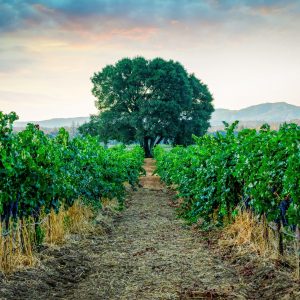 For wine lovers who are burned out on tasting room inflation and commercial overreach, Mendocino offers something increasingly rare: a sense that wine country can still be about wine. The landscapes still feel worked, not staged. The people still feel connected to land and production. The mood is not anti-quality. It is anti-circus.
This is not to romanticize every single producer in the county or pretend Mendocino exists outside of market pressures. Of course it does not. But compared with more aggressively monetized regions, Mendocino still feels like a place where a winery can succeed by being credible rather than theatrical.
Barra benefits from that atmosphere, but it also helps define it.
The winery feels as if it belongs to a region where agriculture still comes first. Where people know what it means to farm. Where a bottle of wine can still be a bottle of wine, not a financial instrument with floral notes.
That, to many drinkers, sounds less like nostalgia and more like relief.
If California wine wants a future, it should pay attention to places like Barra
The wine industry spends a lot of time worrying about younger drinkers, changing habits, declining interest, and the erosion of wine’s cultural centrality. Much of that concern is real. But a lot of the industry’s self-analysis also misses something obvious.
People did not simply fall out of love with wine.
A lot of people fell out of love with what the wine experience became.
Too expensive. Too scripted. Too commercial. Too eager to make the consumer feel either inadequate or overcharged, sometimes both in a single flight.
This is where Barra of Mendocino and the broader Mendocino wine scene look important. They point toward a better version of California wine culture. One grounded in farming, family continuity, regional identity, and bottles that still seem to understand pleasure without requiring theater.
That is not a sentimental point. It is a strategic one.
Because if the future belongs to regions that can rebuild trust, reduce friction, and offer consumers something honest, then Mendocino is very well positioned. It has authenticity without having to scream about it. It has quality without forcing every visitor into a premium ritual. It has history without turning that history into a costume.
And Barra is one of the clearest examples of what that looks like when done well.
Final pour
Barra of Mendocino is impressive for the right reasons.
It is impressive because it is rooted in a real family wine story, not a fabricated narrative arc. It is impressive because Martha Barra appears to have helped build and sustain a serious wine business, not merely inherit a title. It is impressive because the vineyard commitment feels substantial, the organic farming ethos feels earned, and the wines themselves suggest a winery more interested in drinking well than posturing beautifully.
But the larger story here is not just Barra.
It is Mendocino.
More specifically, it is the fact that the Mendocino AVA increasingly feels like exactly what many wine lovers have been searching for. A place with excellent growers and vintners. A place where wine still feels connected to agriculture. A place where the tasting room experience has not fully drifted into absurdity. A place where the bottle in front of you still carries some dirt under its nails.
That matters.
Especially now.
Because in an era when too much of California wine has become polished, overpriced, and emotionally exhausting, Mendocino feels like a reminder that wine can still be generous, grounded, and joyfully unpretentious.
And wineries like Barra are the reason that reminder lands.
Barra Reserve Chardonnay 2024
Wine X Rating: XX½
There is a particular kind of Chardonnay that seems determined to make you work for it. It arrives with too much oak, too much butter, too much emotional need, and the sort of needy overexplanation usually associated with people who describe themselves as “a lot” before dessert. Thankfully, Barra’s 2024 Reserve Chardonnay is not one of those wines.
This is a Chardonnay with actual self-control.
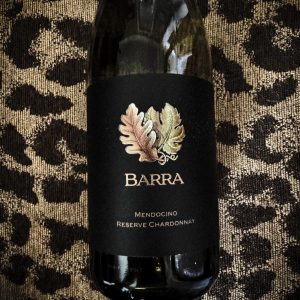 The nose opens with ripe pear, golden apple, lemon curd, and white peach, backed by a soft thread of vanilla, toasted almond, and just enough creaminess to make things interesting without turning the whole bottle into a dairy product. There is a nice California generosity here, but it is not lazy. The fruit feels clean, bright, and intact, not shellacked under a layer of oak-derived personality disorder.
On the palate, the wine is smooth, round, and inviting, but what stands out most is its balance. There is enough richness to satisfy Chardonnay drinkers who want texture and warmth, but enough lift and freshness to keep it from feeling heavy-handed. The oak is present, but not performative. It frames the wine rather than sitting on its chest.
That is the trick with Chardonnay, isn’t it? The difference between luxurious and exhausting is often about two ill-advised cellar decisions and one winemaker who needed more restraint.
Barra gets the ratio right.
What makes this wine especially appealing is that it feels grown-up without becoming severe. It is polished, but not cold. It is generous, but not obvious. It does not scream “look how serious I am,” which is refreshing in a category that occasionally behaves like it deserves its own tax bracket.
This is the sort of Chardonnay that belongs next to roast chicken, lobster pasta, buttery halibut, or a long dinner where nobody is pretending to be in a Michelin documentary. It has enough structure to handle food, enough fruit to charm a crowd, and enough composure to remind you that California Chardonnay can still be beautiful when it stops trying to be either Napa cosplay or anti-Chardonnay propaganda.
Final verdict: This is elegant California Chardonnay without the ego, polished enough for the table and relaxed enough for real life.
Barra Reserve Pinot Noir 2024
Wine X Rating: XX½
Pinot Noir is the grape most likely to either seduce you completely or annoy you so deeply you consider switching to bourbon out of principle.
Too often, domestic Pinot falls into one of two camps: fragile and precious, like it needs emotional support and a handwritten note, or jammy and overripe, like it accidentally wandered into Syrah’s business and decided to stay.
Barra’s 2024 Reserve Pinot Noir lands in a far more attractive middle ground.
The nose opens with red cherry, raspberry, wild strawberry, and rose petal, with a soft earthy undercurrent that 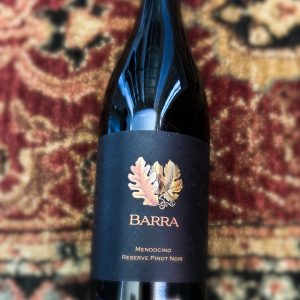 keeps the fruit from floating off into generic “pretty wine” territory. There is a touch of spice, tea leaf, and subtle forest-floor character that gives the wine shape and maturity without weighing it down. It smells like it has somewhere to be.
On the palate, this is silky, bright, and beautifully composed. The red fruit carries the front of the wine, but there is enough savory edge and fine structure underneath to keep it from becoming too soft-focus. The tannins are gentle, the acidity is well-placed, and the finish has that quiet persistence good Pinot needs, the kind that does not shout but absolutely knows it was invited.
This is where the wine earns its respect.
Because Pinot should not have to choose between charm and seriousness. The best examples manage both. They flirt a little, then say something intelligent. They know how to make an entrance without hijacking the room.
That is exactly what Barra’s Reserve Pinot does.
It is not trying to cosplay Burgundy. Thank God. California Pinot is at its worst when it behaves like it is apologizing for sunlight. This wine embraces ripeness where it should, keeps restraint where it matters, and delivers a profile that feels genuinely pleasurable rather than academically approved.
This is a bottle for duck breast, mushroom risotto, cedar-plank salmon, or one of those evenings when the music is good, the lights are low, and everyone suddenly becomes more attractive after the second glass. It has enough elegance to impress serious drinkers and enough generosity to win over the people who claim they “don’t usually like Pinot.”
They probably just haven’t had the right one.
Final verdict: A poised, polished Pinot with enough red-fruited charm and savory depth to remind you why this grape still gets away with everything.
Barra Reserve Zinfandel 2023
Wine X Rating: XX½
Zinfandel is one of California’s great shape-shifters. At its best, it is generous, spicy, and gloriously alive. At its worst, it tastes like somebody reduced a berry pie over a scented candle and then asked you to call it bold.
Barra’s 2023 Reserve Zinfandel lands firmly in the first category.
This is a Zin that understands pleasure without surrendering all dignity.
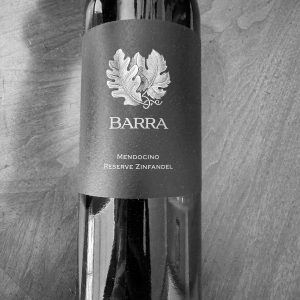 The nose comes in rich and expressive with blackberry jam, black cherry, ripe plum, cracked pepper, and warm baking spice, followed by hints of cocoa, vanilla, and toasted oak. It is unmistakably California, but it avoids that sticky, overworked profile that can make some Zinfandels feel like they are trying to seduce you with a ring light and a trust fund.
Instead, this wine feels grounded.
On the palate, the fruit is full and dark, but there is a welcome thread of spice and structure running through it that keeps everything from tipping into syrup. The wine is lush, broad, and confident, with enough concentration to satisfy people who want body and impact, but enough composure to avoid becoming a caricature of itself. The finish lingers with ripe berries, black pepper, and a little sweet tobacco warmth, which is exactly where a Zin like this should leave you.
What Barra gets right here is that it lets Zinfandel be what it naturally wants to be, bold, ripe, and a little dramatic, without turning the whole experience into a fruit bomb with boundary issues.
That distinction matters.
Because good Zinfandel should feel like a charismatic dinner guest, not a guy at a steakhouse who keeps saying “you only live once” before ordering another Old Fashioned.
This is a wine with appetite. It wants grilled tri-tip, barbecue ribs, spicy sausage, short ribs, or a burger that has no business being as expensive as it is. It also has enough polish to make it more versatile than the category sometimes gets credit for. You could absolutely pour this at a dinner party and watch people who think they are “Cabernet people” slowly become much less sure of themselves.
As they should.
Final verdict: Rich, spicy, and deeply satisfying, this is Zinfandel doing what California still does best when it remembers to stop overthinking.